Home / Locations / Claude AI in New Zealand
Claude AI · New Zealand · Checked November 2026
Claude AI in New Zealand: Privacy Act duties and practical team training
Kiwi organisations rarely ask us whether Claude is allowed. They ask how to use it without tripping over the Privacy Act, what the Privacy Commissioner expects, and whether the new indirect-collection principle changes anything. Those are the right questions. Below you will find direct answers, the sectors where we see real use, and how training fits around a New Zealand working day.
Enquiries
Tell us about your team in New Zealand
Let us know the size of the group and what you want them doing differently. We come back with options timed for NZST or NZDT, whichever applies.
Reply within one working day. No sales sequence, no mailing list.
Quick answer
Claude in New Zealand at a glance
Availability. New Zealand appears on Anthropic’s list of supported countries as of 10 November 2026. Individuals, teams and API customers can all sign up from a New Zealand address.
Billing. Look at the currency on the checkout screen for your plan. If it is US dollars, which is what we would expect, build some exchange-rate room into the budget and ask how GST is shown on the invoice before you approve an annual commitment.
Language. Claude writes New Zealand English once you ask for it, including -ise spellings and local terms. It can draft te reo Māori, but macrons, dialect and tone go wrong often enough that a fluent speaker must review anything public. For material that carries tikanga, ask the right people first and treat the tool as secondary.
Privacy. No AI statute exists in New Zealand. The Privacy Act 2020 and its thirteen information privacy principles do the work, and the Privacy Commissioner has said plainly that they apply to AI tools.
Privacy Act
What the Privacy Act 2020 asks of a team using Claude
The Commissioner’s AI guidance. The Office of the Privacy Commissioner (OPC) published Artificial intelligence and the information privacy principles on 21 September 2023, following its earlier expectations on generative AI. The guidance walks through each principle as it applies to building and using AI tools, and the OPC strongly encourages a privacy impact assessment before a tool goes live. It is guidance, not law, but it tells you what the regulator will ask if something goes wrong.
Sending information offshore. Claude is hosted overseas. Principle 12 restricts disclosing personal information to a foreign recipient. The OPC’s Principle 12 guidance says that using an offshore cloud provider to store or process information on your behalf is not treated as a disclosure, provided the provider does not use that information for its own purposes. That is why plan choice matters: check the terms of the plan you buy, and prefer one where your content is not used for model training.
IPP 3A, in force since 1 May 2026. The Privacy Amendment Act 2025 received royal assent on 23 September 2025 and added a new principle. When an agency collects personal information from someone other than the person concerned, it must take reasonable steps to make sure that person knows about it, subject to exceptions. It applies to information collected on or after 1 May 2026. If staff feed Claude with details gathered from third parties, such as referees, brokers or public profiles, the collection itself now carries a notice duty.
Biometrics. The Biometric Processing Privacy Code 2025 took effect on 3 November 2025, and organisations already using biometrics were given until 3 August 2026 to comply. Voice prints and face images do not belong in a general-purpose chat tool.
We teach how to work inside these rules. We are trainers, not your legal counsel, and your privacy officer should make the final call.
Leave out entirely
IRD numbers, NHI numbers, health records, biometric data, and anything about an identifiable child.
De-identify before use
Customer complaints, HR investigation notes, tenancy files and CVs. Remove names and contact details and work from a reference number.
Generally suitable
Policies, board paper drafts, submissions on public consultations, tender responses and published reports, on a Team or Enterprise plan.
Sectors
New Zealand industries and the Claude tasks that suit them
Dairy, meat and horticulture exporters
Reconciling customer specifications with product data sheets, drafting responses to overseas market access queries, and summarising long audit reports for the operations manager.
Central government, mostly in Wellington
First drafts of briefings and Cabinet paper sections from source material, plus sorting documents in scope of an Official Information Act request. A person still decides what is released.
Councils and infrastructure
Summarising submissions on a long-term plan, comparing consent conditions across projects, and turning engineering reports into plain-English updates for ratepayers.
Banks, insurers and KiwiSaver providers
Mapping a Financial Markets Authority or Reserve Bank publication against current policy and producing a change list for the risk team.
Software exporters
Auckland, Wellington and Christchurch firms selling abroad use Claude Code in engineering and Claude for support replies, release notes and security questionnaires.
Tourism operators
Queenstown and Rotorua businesses handling enquiries from many markets: itinerary drafts, supplier emails and review replies, each checked by a staff member.
Iwi organisations and Māori-owned businesses often raise Māori data sovereignty. The OPC’s AI guidance includes a section on te ao Māori perspectives, and it is worth reading before any dataset about whānau, hapū or iwi goes near an offshore tool.
Example workflow
Illustration: an Auckland recruiter checks its IPP 3A exposure
This scenario is made up for teaching purposes and does not describe a customer. A recruitment agency with forty staff collects candidate details from LinkedIn, referees and client HR teams. All three are indirect sources, so IPP 3A now applies to each new collection.
The operations lead opens a Claude Project and loads the agency’s privacy statement, candidate terms, referee script and intake form templates. None of these contains candidate data. The instruction is specific: list every point where information about a person arrives from someone else, say whether the current documents tell that person about it, and quote the wording relied on.
Claude produces a table of collection points, the notice that exists for each, and the gaps. It also drafts plain-language wording for the gaps. The privacy officer reviews the table against the OPC’s IPP 3A guidance and decides what to change. A job that might have sat in a backlog for months becomes a two-hour review, and the judgement stays with a person.
Formats
How we schedule and deliver for New Zealand
Live online, NZ hours
New Zealand Standard Time is UTC+12. Daylight time, UTC+13, runs from the last Sunday in September to the first Sunday in April. Our trainer is based in India, several hours behind, so afternoon slots in New Zealand line up most easily.
Executive briefing
For chief executives, boards and senior leadership teams. It covers capability, limits, the Privacy Act points on this page and a shortlist of first use cases.
Onsite by arrangement
In-person delivery in New Zealand can be arranged for larger programmes. Travel distance means these are planned well ahead and confirmed case by case.
All sessions are in English and use your own documents for the exercises. Teams split between New Zealand and a Singapore or UK office can join one cohort, and those pages cover the privacy rules that apply at the other end.
Your trainer
About Hitesh Motwani
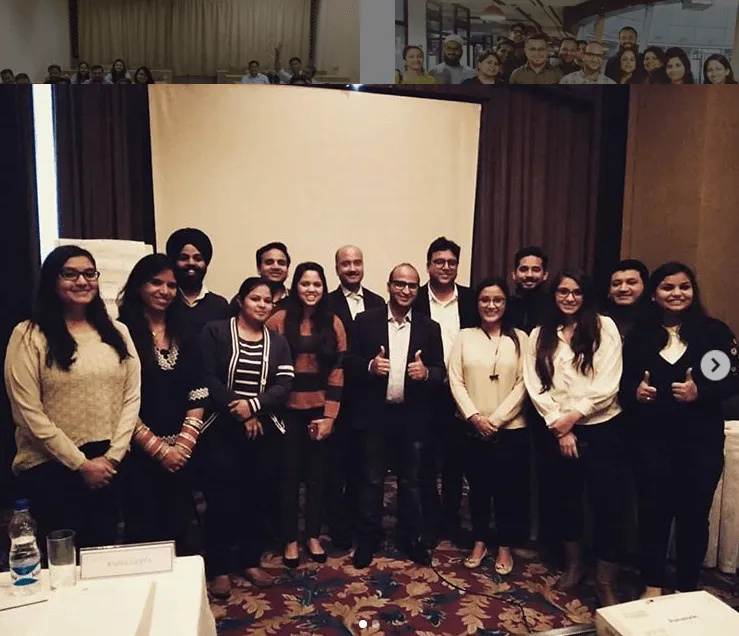
Your sessions are taught by Hitesh Motwani, author of Generative AI 360 (ZebraLearn) and an Anthropic Claude Certified trainer. Over 200,000 professionals have trained with him. That includes executive programmes at IIM Bangalore and corporate teams across India, the Gulf and beyond. The photographs here show past in-person programmes, all held in India.


Common questions
New Zealand questions about Claude, answered
Is Claude officially available in New Zealand?
Yes. New Zealand is on Anthropic’s supported countries list, checked on 10 November 2026.
Does New Zealand have an AI law we need to comply with?
Not a dedicated one. The Government’s AI strategy, released by MBIE on 8 July 2025, relies on existing law. For most organisations that means the Privacy Act 2020, along with whatever sector rules already apply to you.
Does using Claude count as sending personal information overseas?
It can. The OPC’s Principle 12 guidance treats an offshore provider that only stores or processes information for you, and does not use it for its own purposes, as outside the disclosure rule. Check the plan terms, do a privacy impact assessment, and keep sensitive records out regardless.
What changed on 1 May 2026?
IPP 3A came into force. If you collect personal information about someone from a third party, you must take reasonable steps to tell that person, unless an exception applies. It covers information collected from that date onward.
Can Claude write in te reo Māori?
It can produce a draft. Expect errors in macrons and phrasing, and have a fluent speaker review it. For names, karakia or anything with cultural weight, start with a person who has the standing to advise.
Can public sector teams take part?
Yes. We adapt exercises to public sector work such as briefings and Official Information Act responses. Your agency’s own AI and information security policies decide which tools and data are allowed, so share them before the session.
Is there a developer track for Claude Code?
Yes. Engineers work in their own codebase during the session, with attention to review, testing and secrets handling.
How do you charge?
By the session or programme, not per head. We send a quote once we know the group size and what you want covered.
Talk to us about Claude training in New Zealand
Give us a rough headcount, the teams you have in mind and one process you would like to fix first. Expect a reply inside a working day, with a draft plan and times that suit New Zealand.