Home / Locations / Claude AI in Riyadh
Claude AI · Riyadh · Checked November 2026
Claude AI training in Riyadh for government, finance and regional head offices
Riyadh is where Saudi decisions get written down. Ministries, regulators, the project companies building Diriyah and Qiddiya, and the regional headquarters that multinationals have opened here all produce the same thing in volume: formal documents, in Arabic and English, that someone senior must approve. Teams in the capital ask us how Claude fits into that approval chain without breaking the PDPL. This page is about Riyadh only. The law itself is explained on our Saudi Arabia page.
Enquiries
Tell us about your team in Riyadh
Mention whether you are a government entity, a project company or a regional head office. We answer with a format and dates on Riyadh time (UTC+3).
Reply within one working day. No sales sequence, no mailing list.
Quick answer
Claude in Riyadh at a glance
Can we buy it? Saudi Arabia appears on Anthropic’s list of supported countries, so a Riyadh company can subscribe directly. Charges are in US dollars on a card, not in riyals.
What does the law say? The Personal Data Protection Law has been enforced in full by SDAIA since 14 September 2024, and SDAIA’s transfer regulation governs personal data that leaves the Kingdom. Dates, safeguards and the regulators involved are set out on the national page. We teach people to use the tool; your DPO decides what is lawful.
How is the Arabic? Anthropic’s published Global-MMLU scores put Arabic comprehension within about one point of English on its larger current models. Writing is a different skill. Official Najdi-flavoured phrasing, honorifics and ministry letter formats still need a Saudi reviewer.
What is different about Riyadh? More of the work is government-facing than anywhere else in the Kingdom. That changes which documents we practise on, and it makes the approved-tools question come first.
Riyadh employers
Four kinds of Riyadh organisation, four different starting points
Our Jeddah sessions are built around port paperwork, trading houses and pilgrim services. Riyadh is another city entirely. Most groups we speak to here fall into one of the types below, and each begins from a different place.
Ministries, authorities and regulators
The first step is internal: has the entity approved an AI tool, and for which data classification level? Until that is settled, we brief leadership and train on published material only, such as issued regulations, strategy documents and public consultation papers. Typical practice tasks are cabinet-style briefing notes, comparison of a draft regulation with the previous version, and minutes turned into an action register.
PIF portfolio and project companies
Riyadh hosts project companies for Diriyah, Qiddiya, ROSHN and New Murabba, and the company PIF set up in 2025 to deliver Expo 2030. Their staff live inside master plans, consultant reports and steering-committee packs. Useful tasks: a one-page decision note from a 150-page consultant deliverable, a register of open risks pulled from monthly reports, and a consistency check between a board paper and its appendices.
KAFD banks, funds and advisers
The King Abdullah Financial District in the north of the city, served by its own metro interchange since December 2024, concentrates banks, asset managers and professional firms. Their questions are about SAMA and Capital Market Authority rules. We practise on rulebooks, public prospectuses and anonymised memos, never live client files.
Regional headquarters of multinationals
Since 1 January 2024, foreign companies generally need a Saudi regional headquarters to tender for government contracts, with an exemption for contracts under SAR 1 million. The offices opened under that rule are small senior teams coordinating many countries. They ask for help with consolidation: country reports, group policies, and bilingual submissions to Saudi clients.
Consultancies and contractors serving government
Firms around Olaya and the Digital City write proposals, inception reports and weekly status updates for public clients. Claude helps structure a deliverable against the terms of reference and keep terminology identical across a long Arabic and English report.
Health, education and semi-government operators
Large hospitals, universities and holding companies based in the capital use the same skills for policies, committee papers and staff circulars. Patient and student records are excluded from every exercise.
Example workflow
Illustration: a regional head office builds its monthly board pack
What follows is a teaching scenario, not something a client did. Picture a regional headquarters in Riyadh with twelve staff. On the fifth of each month, country managers in Saudi Arabia, the UAE, Egypt and Kuwait send in reports. Each uses a different template, two arrive in Arabic, and the regional director needs one English pack for the global board by the tenth.
In the session, the group sets up a Claude Project containing the board’s required template, last month’s approved pack and a glossary of product and entity names. The instruction is plain: fill each template section from the country reports, cite the report and page for every figure, list numbers that conflict between reports, and leave blank anything not stated. Employee names and customer names are swapped for role titles and account codes before upload.
Claude returns a draft pack and a separate conflicts list. The finance manager checks every figure against its cited source, the director rewrites the commentary in her own voice, and the Arabic-speaking analyst confirms nothing was lost from the two Arabic reports. Nobody claims the pack writes itself. What changes is that the director spends her time on the judgement paragraphs rather than on copying tables.
Approval chains
Fitting Claude into a Riyadh sign-off process
Documents in the capital usually pass through several hands: an analyst drafts, a manager edits, legal or compliance reviews, and a director or deputy minister signs. People worry that an AI draft blurs who is responsible. Three habits we teach keep responsibility clear.
First, the drafter records in the cover note which parts were machine-drafted and which sources were supplied. Second, every figure, date and legal reference carries a citation back to the uploaded source, so the reviewer can test it in seconds. Third, the Arabic and English versions are produced from one agreed master text, and a bilingual colleague compares them line by line before signature. These are small rules, but they are what reviewers in ministries and boards ask about most.
Drafter
States what was uploaded, what Claude produced, and what was changed by hand.
Reviewer
Checks citations against sources, not just the prose. Sends back anything uncited.
Signatory
Receives a document with a clear human owner. The tool is never the author of record.
Formats
Session formats for teams in the capital
Live online on Riyadh time
Riyadh keeps UTC+3 through the whole year; clocks never change. Sessions are placed inside the Sunday to Thursday week. Regional head offices often include colleagues from other Gulf offices on the same call, so we check everyone’s local hour first.
Leadership briefing
A short session for undersecretaries, chief executives or regional directors. It covers what the tool can be trusted with, what it gets wrong, the PDPL questions to hand to the DPO, and who should be in a first pilot group.
Onsite by arrangement
In-person delivery in Riyadh can be planned for larger groups. Travel and venue access, particularly for government buildings and KAFD towers with visitor registration, need lead time, so dates are settled during the first call.
English is the language of delivery. Arabic documents are welcome in the exercises, and each group should include at least one colleague who can judge formal Arabic output.
Your trainer
The person teaching
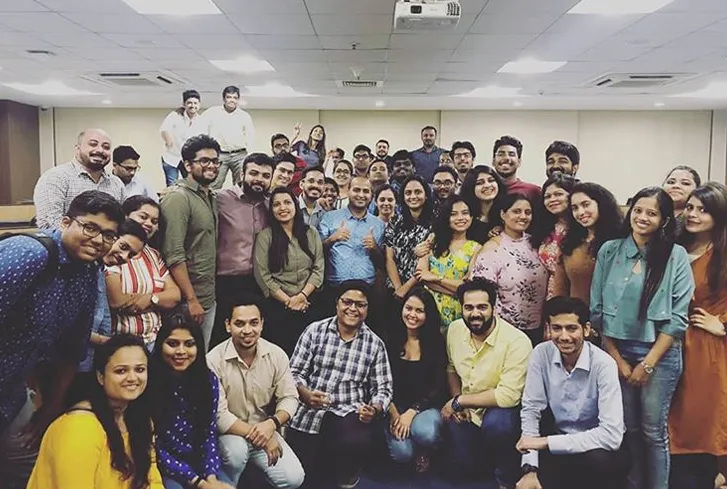
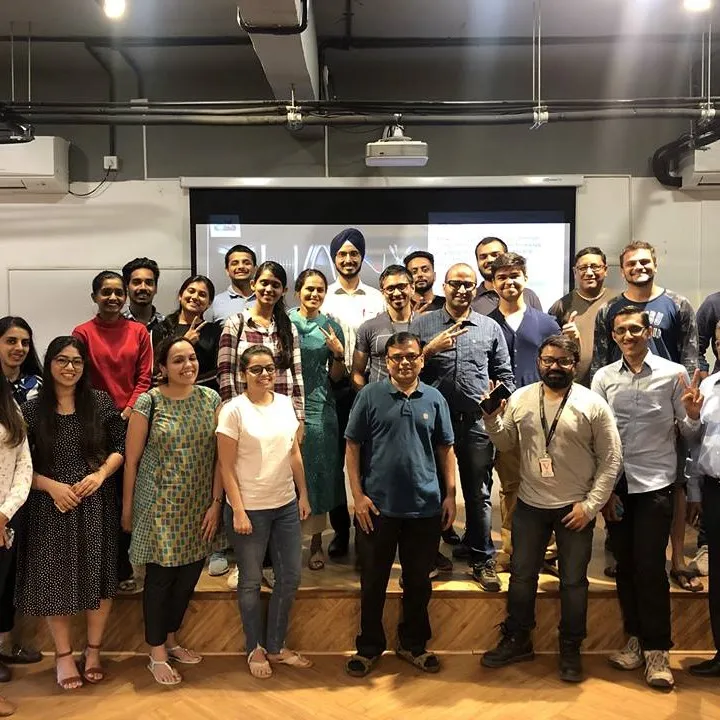
Hitesh Motwani teaches each session himself. He is an Anthropic Claude Certified trainer and wrote Generative AI 360 (ZebraLearn). More than 200,000 professionals have trained with him, including executive programmes at IIM Bangalore and corporate teams across India, the Gulf and beyond. The pictures here show earlier classroom sessions in India.

Your questions
Claude AI training in Riyadh: what teams ask
Can a Saudi ministry or authority use Claude?
Only the entity can answer that, through its own approved-tools list and data classification policy. We do not assume approval. While the decision is pending we can brief leadership and run practice sessions on published, non-sensitive documents.
We opened a regional headquarters in Riyadh this year. Is a small team worth training?
Yes. Regional head offices are usually ten to thirty senior people handling reports from many countries, which is exactly the consolidation work Claude suits. One briefing and two hands-on blocks are normally enough to start.
How is this page different from your Saudi Arabia and Jeddah pages?
The Saudi Arabia page explains the PDPL, SDAIA and the national sectors. Jeddah covers port, trade and pilgrim-service teams. This one deals with the capital: government bodies, PIF project companies, KAFD finance and regional headquarters.
Will Claude write a formal letter to a minister’s office?
It will produce a competent Modern Standard Arabic draft if you give it an approved example to follow and a glossary of titles. A Saudi colleague must still correct forms of address and sign off the final text.
Can project-company staff upload consultant reports?
Check the confidentiality terms of the consultancy contract and your own data policy first. Many reports contain no personal data but are commercially restricted. On a business plan your content is not used for model training by default, yet contract terms may still limit where a document can be processed.
Do you train developers at Riyadh tech teams on Claude Code?
Yes. Engineering groups get their own practical track that works inside the team’s repository and code-review routine, separate from the business-user sessions.
Can colleagues in Jeddah or Dammam join a Riyadh programme?
They can join the live online blocks, since all three cities share the same clock. An in-person day in Riyadh can be added by arrangement when the group is large enough.
What does a Riyadh programme cost?
There is no per-seat price list. We quote for the session or programme once we know the audience, the format and whether any part is in person.
Arrange Claude training for your Riyadh team
Send us your organisation type, the number of people and two or three documents your team produces every month. Within one working day you will have a proposed format and dates on Riyadh time.