Home / Locations / Claude AI in Singapore
Claude AI · Singapore · Checked November 2026
Claude AI in Singapore: PDPA, MAS expectations and training for regional teams
Singapore firms tend to arrive with the access question already solved and a governance question in its place. Which of the many frameworks actually binds us: the PDPA, the PDPC guidelines, the IMDA model frameworks or the MAS guidelines? What can a relationship manager or an associate put into a prompt? And how do we train a regional head office whose staff report into six other countries?
Enquiries
Tell us about your team in Singapore
Let us know the function, the group size and whether colleagues from other offices will dial in. We will suggest an online format and dates on Singapore Time (UTC+8).
Reply within one working day. No sales sequence, no mailing list.
Quick answer
Using Claude in Singapore: the short version
Supported? Yes. Singapore appears on Anthropic’s supported countries page as of 11 November 2026. That page covers Claude.ai and the API. Anthropic also announced in September 2026 that it would open a Singapore office; your purchase route stays the same either way.
Cost and currency. Read these off the checkout screen. We leave billing currency out of this page on purpose, since it is not ours to promise.
Language. Work here is done in English, where Claude is at its strongest. Set British spelling once in a Project instruction. It also handles Mandarin, Malay and Tamil for translation and customer replies, with a fluent reviewer. It understands Singlish in incoming messages and should answer in standard English.
Rules. One statute is binding on almost everyone: the Personal Data Protection Act. Most of the AI-specific material is guidance. Financial institutions have an extra layer from the Monetary Authority of Singapore.
Rules
PDPA first, then the guidance from PDPC and IMDA
The Personal Data Protection Act 2012 (PDPA). The PDPA applies to private-sector organisations and is enforced by the Personal Data Protection Commission (PDPC). Public agencies follow separate government rules. For an AI rollout, four obligations do most of the work: consent and notification, purpose limitation, protection, and the transfer limitation obligation. The last one means personal data sent outside Singapore must receive a comparable standard of protection, usually through contract terms with the recipient. Mandatory data breach notification has applied since 2021.
PDPC’s AI guidelines. On 1 March 2024 the PDPC issued its Advisory Guidelines on Use of Personal Data in AI Recommendation and Decision Systems. They explain how the PDPA applies when personal data is used to develop, test and deploy such systems, and what to ask of a vendor. They are not legally binding, but they indicate how the PDPC is likely to interpret the Act.
IMDA’s model frameworks. Singapore’s Model AI Governance Framework dates from 2019, with a second edition in 2020. IMDA and the AI Verify Foundation released a version for generative AI on 30 May 2024, built around nine dimensions such as accountability, data, incident reporting and testing. A framework for agentic AI followed on 22 January 2026, according to law-firm reports, covering systems that take actions and not only produce text. All three are voluntary.
We run training, and nothing on this page is legal advice. Take the final view from your Data Protection Officer or external counsel.
Not for prompts
NRIC and FIN numbers, client account and portfolio details, medical information, and anything covered by banking secrecy or legal privilege, unless compliance has approved that specific use.
De-identify first
CRM exports, HR case files, claims data and complaint logs. Strip identifiers, or work from the aggregated view.
Sensible starting material
Published regulations, your own policies and SOPs, board paper templates, market research you are licensed to use, and anonymised management reports, on a plan approved by IT security.
Financial sector
What MAS adds for banks, insurers and asset managers
The Monetary Authority of Singapore has addressed AI in stages. Most recently it published Guidelines on Artificial Intelligence Risk Management. Law-firm summaries date these to 7 October 2026, with effect from 7 October 2027 and a longer period for some sections. We could not read the MAS document text directly, so confirm the dates on the MAS website.
According to those summaries, the Guidelines apply to all financial institutions in proportion to size and risk. They expect board and senior management oversight, an inventory of AI use, controls across the life cycle including third-party AI, and enough skilled people to run it. They cover generative AI and AI agents.
For training, this changes the order of things. A bank’s staff session should come after the institution has decided which use cases are in its inventory and which Claude plan or cloud route is approved. We then teach to that list.
Where it fits
Singapore’s main business clusters and matching Claude tasks
Private banking and wealth management
Turning research notes into client-ready summaries for a relationship manager to edit, comparing fund documents, and preparing meeting briefs.
Regional headquarters
Consolidating monthly updates from country offices into one management pack, lining up a group policy against local addenda, and drafting the same announcement for several markets.
Shipping, the port and commodity trading
Reading charterparties and sale contracts for laytime, demurrage and notice clauses, building a timeline from voyage emails, and drafting a first response to a claim for a lawyer or operator to finish.
Law firms and in-house legal teams
First-pass contract review against a playbook, chronology building from disclosed documents, and clause comparison across drafts, with a lawyer checking every citation.
Government-linked companies and their suppliers
Tender responses assembled from past submissions, board and committee papers in the required format, and plain-English summaries of long consultant reports.
Technology and fintech teams
Claude Code for engineering work, plus product requirement drafts, incident write-ups and answers to customer security questionnaires.
Example workflow
Illustrative: a regional HR team rolling out one policy across six markets
The following is a made-up scenario for teaching purposes; it is not drawn from a client. A manufacturer’s Asia head office near one-north issues a revised flexible-work policy. Each country office has a local addendum, and nobody is sure which ones now conflict with the group text.
The HR business partner places the group policy and the addenda for Singapore, Indonesia, Vietnam, India, Taiwan and Hong Kong in a Claude Project. No employee data is involved. The instruction asks for a table: each group clause, what each addendum says on the same point, whether they conflict, and the exact wording quoted from both. A second request drafts a short note to each country HR lead listing only that country’s conflicts.
Local HR and counsel then decide what to change, because employment rules differ in every one of those places. Our pages for Indonesia, India and Hong Kong cover the data rules in those markets.
Formats
Ways to run the training from Singapore
Live online on SGT
Singapore Time is UTC+8 and never shifts for daylight saving. That puts Manila, Hong Kong and Taipei on the same clock and Jakarta and Hanoi one hour behind, which makes a single regional session practical.
Board and management briefing
A focused session on what Claude can and cannot be trusted with, how the PDPA and the relevant guidance apply, and what a sensible internal usage rule looks like.
Onsite by arrangement
In-person sessions at your Singapore office can be arranged for larger groups. Dates depend on travel, so we agree them when we speak.
Sessions are delivered in English, online unless an onsite visit has been agreed. A note on funding, since we are asked often: we make no claim that these sessions qualify for SkillsFuture or any other government subsidy. Budget for them as ordinary corporate training.
Your trainer
Who teaches the programme
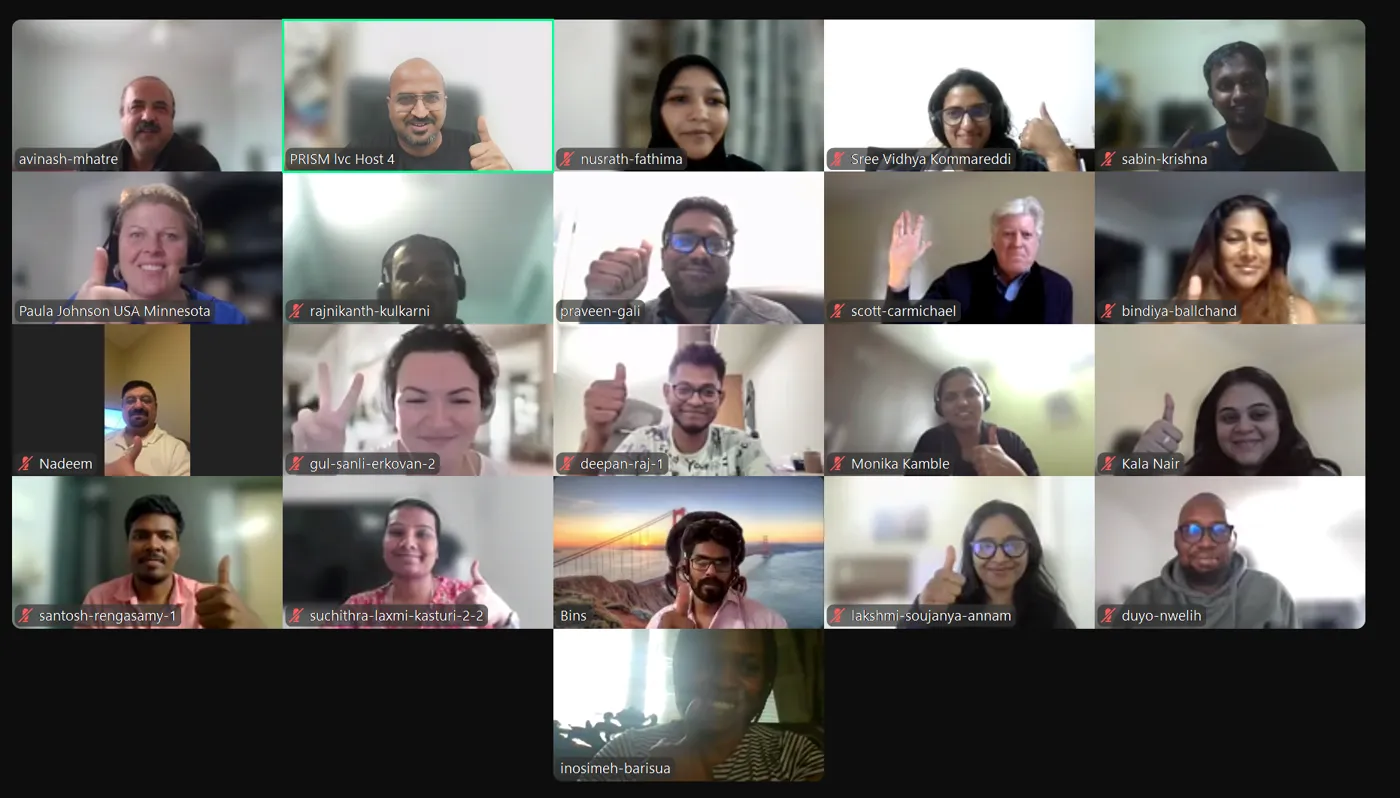
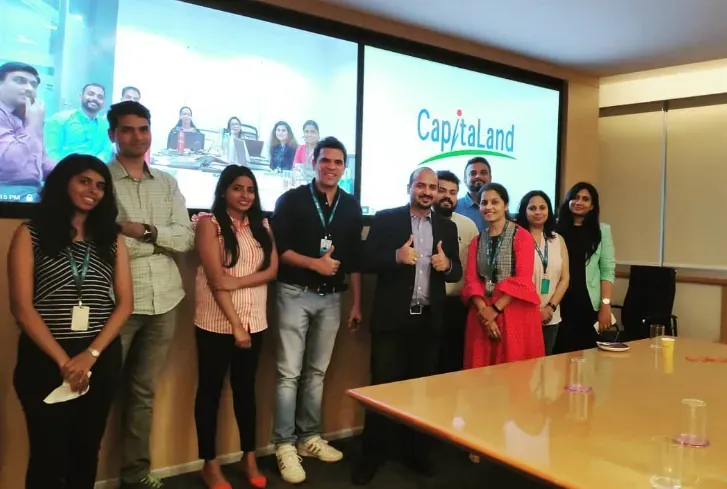
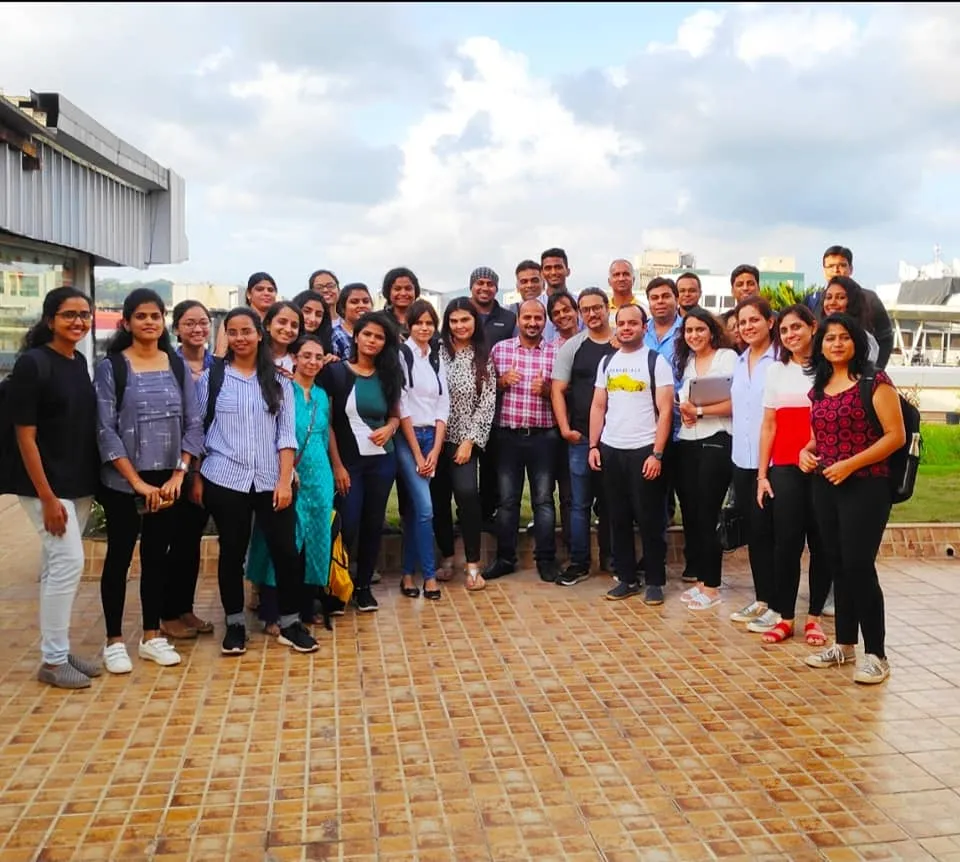
Your sessions are run by Hitesh Motwani, an Anthropic Claude Certified trainer and the author of Generative AI 360 (ZebraLearn). He has trained 200,000+ professionals, including executive programmes at IIM Bangalore and corporate teams across India, the Gulf and beyond. These photographs are from past sessions held in India.

Your questions
Claude AI in Singapore: frequent questions
Are Claude.ai and the Claude API both offered in Singapore?
Yes. Singapore is on Anthropic’s supported countries page, and that page covers Claude.ai and the API. We checked on 11 November 2026.
Does the PDPA allow personal data to be sent to an overseas AI service?
It can, if the transfer limitation obligation and the other PDPA obligations are met. In practice most teams avoid the issue by keeping personal data out of prompts or de-identifying it first.
Are the IMDA Model AI Governance Frameworks mandatory?
No. The 2020, generative AI and agentic AI frameworks are voluntary guidance. Many organisations still use them to structure an internal AI policy.
We are a MAS-regulated firm. Can staff use Claude?
That is for your risk and compliance functions to decide under MAS expectations, including the AI risk management guidelines. We train staff on the use cases and tools your institution has approved.
Is this course SkillsFuture-funded?
We do not claim that. Please treat it as standard corporate training without subsidy.
Can colleagues in other Asian offices join the same session?
Yes. Sessions are online, and UTC+8 overlaps well with most of East and Southeast Asia.
Do you run Claude Code sessions for developers?
Yes. It is a separate practical track for engineering teams, using a sample repository or one your security team has cleared.
Book Claude training for your Singapore team
Send us the function, the number of people and any other offices that should join. We respond within one working day with a recommended format and session times in SGT.