Home / Locations / Claude AI in Poland
Claude AI · Poland · Checked November 2026
Claude AI in Poland: the new AI act, client data and training for service centres
Poland now has its own AI act, so the questions we get from Polish teams have changed. Managers in Kraków and Wrocław service centres want to know what the new supervisory commission means for them. Polish companies ask how well Claude writes Polish and what UODO expects. This page answers those, then shows how our live training works for Polish teams.
Enquiries
Tell us about your team in Poland
Tell us the city, the team type and whether client contracts limit your tools. We suggest dates in Warsaw time (CET/CEST).
Reply within one working day. No sales sequence, no mailing list.
Quick answer
Can a Polish company use Claude?
Access. Poland is on Anthropic’s list of supported countries and regions. Confirm on anthropic.com/supported-countries when you buy, because Anthropic updates the list.
Billing. Anthropic uses local-currency pricing where it supports one, otherwise US dollars. Check at checkout whether you are quoted in złoty, euros or dollars, and enter your NIP with the EU VAT prefix in the billing settings.
Polish. Claude writes good business Polish, including the formal Pan/Pani address in customer letters, if you tell it which register you want. The Claude interface is not available in Polish, so staff navigate it in English, but they can chat in Polish throughout.
Rules. GDPR plus the Polish Personal Data Protection Act of 10 May 2018, supervised by the President of UODO. Since August 2026 a national AI act sits on top. Both are explained below.
Rules
UODO, the AI systems act and KRiBSI
Personal data in Poland falls under the GDPR and the Act of 10 May 2018 on the protection of personal data. The supervisory authority is the Urząd Ochrony Danych Osobowych (UODO). For a Claude rollout the usual GDPR checks apply: a business plan with a data processing agreement, a clear purpose, minimal personal data in prompts and, where needed, an impact assessment.
Poland’s act on artificial intelligence systems (ustawa o systemach sztucznej inteligencji), which implements the EU AI Act nationally, was signed by the President in July 2026 and came into force on 11 August 2026. It creates the Komisja Rozwoju i Bezpieczeństwa Sztucznej Inteligencji (KRiBSI) as the central AI supervisory body, handling complaints, regulatory sandboxes and individual opinions for businesses. Its inspection and penalty powers apply from late October 2026, and the commission was being set up this autumn.
The EU AI-literacy duty in Article 4 has applied since 2 February 2025. Since the Digital Omnibus on AI took effect on 27 July 2026, it requires deployers to take measures supporting AI literacy among staff using AI systems. A documented training programme is the clearest evidence you did.
Nothing here is legal advice; we are trainers. Confirm details with your DPO (inspektor ochrony danych) and lawyers.
Service centres
Working for foreign clients: what to check first
Poland’s business services sector serves clients and group companies across Europe and beyond. In most of those arrangements the Polish centre is a processor, and the contract decides which tools can touch client data. A centre that rolls out Claude without checking each client’s sub-processor list risks a contract breach, even if the GDPR position looks fine.
The practical route is two tracks. Internal work (procedures, training, internal reporting, proposals) can start straight away on your own plan. Client work starts only where the client has approved it, in writing, for a defined scope.
Check per client
Approved tools and sub-processors, data location clauses, confidentiality terms and any AI-specific clauses added to recent contracts.
Keep out of prompts
PESEL numbers, customers’ personal data, payroll data, health data and client-confidential documents without approval.
Start with
Desk procedures, knowledge-base articles, training material, internal management reports and RFP responses.
Where it fits
Polish sectors and the Claude tasks that suit them
Poland combines a large business services and IT sector in Kraków, Warsaw, Wrocław, Łódź, Katowice and the Tricity with manufacturing, logistics and a strong domestic banking sector. Typical starting points:
Finance and accounting centres
Month-end commentary, reconciliation notes, supplier query replies in several languages and process documentation for group finance.
IT services and software houses
Claude Code for developers: code review, tests, refactoring and documentation on repositories the client has cleared.
Banking in Warsaw
Comparing internal procedures with new KNF and EU requirements, drafting customer letters in formal Polish, and summarising long documents without personal data.
Manufacturing and automotive
Plants in Silesia and Greater Poland: summarising quality reports, drafting work instructions for review and comparing supplier specifications.
Road transport and logistics
Drafting carrier and customer correspondence in Polish, German and English, summarising contract terms and preparing tender responses.
E-commerce and retail
Product descriptions in Polish and export languages from one master text, and summaries of customer service themes.
Example workflow
Illustration: explaining KSeF changes to group finance
The workflow below is a teaching illustration, not a client story. Mandatory e-invoicing through Poland’s KSeF system began in February 2026 for large taxpayers and in April 2026 for most other VAT payers. A Kraków finance centre has to explain to the group’s finance team abroad what changed in the invoice process for the Polish entity, using Polish-language Ministry of Finance material and its own new desk procedures.
The team uploads the official material and its procedures, with supplier names removed, to a Claude Project. The instruction: write a two-page English explainer for non-Polish finance managers covering what changed, which steps differ from other countries in the group, what the Polish team now needs from them, and a list of points the sources do not answer. Claude produces a draft and a list of open questions. The Polish tax specialist checks every statement against the official material before it is sent. The specialist’s time goes on checking, not on translating and formatting.
Formats
How training is set up for Polish teams
Live online, Warsaw time
Poland uses CET (UTC+1) in winter and CEST (UTC+2) from the last Sunday of March to the last Sunday of October. Sessions run within Polish working hours, in two- or three-hour blocks so centres can keep service levels.
Leadership briefing
Ninety minutes for site leaders, delivery heads and the DPO: capabilities, client-contract limits, the AI act and KRiBSI, and a pilot plan.
Onsite by arrangement
In Warsaw, Kraków, Wrocław or elsewhere for larger groups. Onsite sessions are scheduled around travel, confirmed during the first call.
Sessions are delivered in English, which most Polish service-centre teams use daily. Participants can prompt in Polish, and exercises use your own documents.
Your trainer
Your trainer for the programme
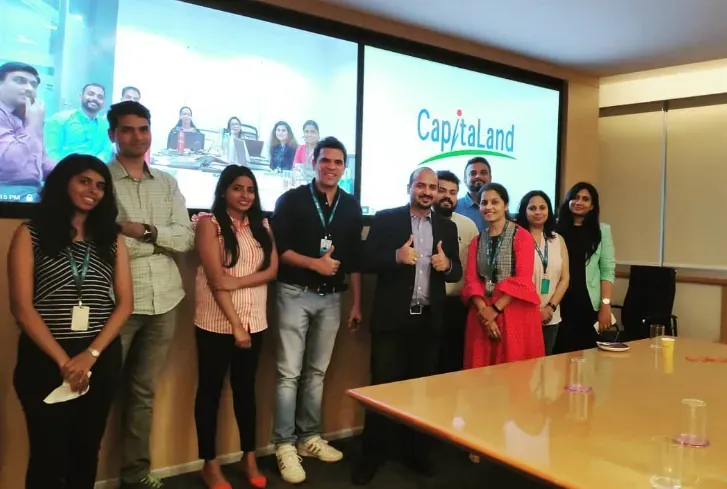
Your sessions are run by Hitesh Motwani, an Anthropic Claude Certified trainer and author of Generative AI 360 (ZebraLearn). His sessions have trained 200,000+ professionals, including executive programmes at IIM Bangalore and corporate teams across India, the Gulf and beyond. The photos below come from in-person sessions he has run.


Your questions
Claude AI in Poland: frequent questions
Is Claude available in Poland?
Yes. Poland is on Anthropic’s supported countries list. Check the live list on anthropic.com before buying.
What is KRiBSI?
The Komisja Rozwoju i Bezpieczeństwa Sztucznej Inteligencji, created by Poland’s AI systems act in force since 11 August 2026. It is the national AI supervisory body, with complaint handling, sandboxes, opinions for businesses and, from late October 2026, inspection and penalty powers.
Does UODO still matter for AI?
Yes. Personal data processed with AI tools is still governed by the GDPR and the 2018 Polish act, and UODO remains the data protection authority.
Can our service centre use Claude on client work?
Only where the client contract allows it. Check each client’s approved sub-processors and get written approval for a defined scope.
How good is Claude’s Polish?
Good for business drafting, summaries and customer letters. Specify the formal register, and have a native speaker check legal and published texts.
Is training required by law?
Article 4 of the EU AI Act requires deployers to take measures supporting AI literacy among staff using AI systems. Documented training is the simplest way to show it.
How is training priced?
We quote per programme or per session once we know group size and goals.
Plan Claude training for your team in Poland
Tell us the city, the number of people and whether client contracts are involved. We reply within one working day with a suggested format and dates in Warsaw time.