Home / Locations / Claude AI in Austria
Claude AI · Austria · Checked November 2026
Claude AI in Austria: what Vienna, Linz and Graz teams need to settle first
Austrian companies tend to be careful adopters, and with good reason. Before anyone gets a Claude seat, HR wants to know whether a works agreement is needed, and the data protection officer wants to know what the Datenschutzbehörde would say. This page covers both, plus how Claude handles Austrian German, and then how our live training is set up for Austrian teams.
Enquiries
Tell us about your team in Austria
Let us know the locations, the departments and whether a works agreement is in progress. We suggest dates in Vienna time (CET/CEST).
Reply within one working day. No sales sequence, no mailing list.
Quick answer
Is Claude available to Austrian businesses?
Access. Austria is on Anthropic’s published list of supported countries and regions. Check the current version at anthropic.com/supported-countries before you buy, because Anthropic edits it.
Billing. Anthropic charges in local currency where supported and handles VAT by billing country. Add your UID number to the account so invoices carry it.
Austrian German. Claude defaults to German as written in Germany. If your documents go to Austrian customers, say so in the instructions: Jänner rather than Januar, Austrian legal terms, and the local form of address. Put this in a Project instruction once and it applies to every chat in that Project.
Rules. GDPR applies, supervised by the Datenschutzbehörde (DSB). For workforce rollouts the Arbeitsverfassungsgesetz (ArbVG) matters just as much. Details below.
Rules
Data protection and AI rules in Austria
Austria applies the GDPR together with the national Datenschutzgesetz (DSG). The Datenschutzbehörde in Vienna is the supervisory authority for companies. For a Claude rollout the practical questions are the usual GDPR ones: which business plan you use, whether a data processing agreement is in place, what personal data goes into prompts, and whether a data protection impact assessment is needed for the use case.
The EU AI Act’s AI-literacy duty in Article 4 has applied since 2 February 2025. Since 27 July 2026 the Digital Omnibus on AI phrases it as an obligation to take measures supporting AI literacy among staff, rather than to guarantee a level of it. Training and records of that training remain the expected response.
For orientation on the AI Act, the KI-Servicestelle at RTR (the Austrian regulatory authority for broadcasting and telecoms) publishes FAQs and guidance for companies. When we checked, legal commentators still described the formal designation of Austria’s AI market surveillance authority as unsettled, so watch that space.
We are trainers rather than your legal advisers. Please confirm specifics with your own advisers.
Works council
ArbVG §96 and §96a: when you need a works agreement
Austrian labour law is stricter on IT systems than many companies expect. Under §96a ArbVG, systems that process employee personal data beyond basic personnel details generally need a works agreement where a works council exists. Under §96, control measures and technical systems that affect human dignity need the works council’s consent, and without it their use is unlawful.
Austrian law firms point out that a missing works agreement can also make the processing a GDPR and DSG issue. A centrally provided AI tool with usage logs is therefore something to discuss with the Betriebsrat before rollout, not after. For §96a matters a conciliation body can replace the council’s consent, but that takes time.
Our suggestion is simple: invite works council members to the pilot training. Once they have seen what the admin console records, the negotiation tends to be about specific clauses rather than the whole tool.
Clauses worth drafting
Purpose limitation for usage logs, retention periods, who holds admin rights, and a ban on using prompt histories for performance assessment.
Data to keep out
Health data, sick-leave records, performance reviews and anything from the payroll system. These are the categories where disputes start.
Data that is usually fine
Product documentation, public tenders, internal policies, anonymised reports and marketing drafts on a business plan.
Where it fits
Austrian sectors and practical Claude work
Austria combines a strong industrial base in Upper Austria and Styria, banks with networks across Central and Eastern Europe, and a large tourism economy in the Alps. Here is where Claude saves time in each.
Banking with CEE subsidiaries
Consolidating reports from subsidiaries in several languages into one German or English summary, comparing group policies with local versions, and drafting board papers.
Steel, metals and machinery
Summarising long technical and safety reports, preparing tender responses, and drafting operating instructions from engineering notes for review.
Hotels and tourism in Tyrol and Salzburg
Guest replies in German, English and Dutch, seasonal job adverts, and turning review feedback into a list of fixes for the next season.
Energy and utilities
Summarising regulatory consultations, drafting customer letters about tariff changes, and comparing supplier contracts.
Tax and audit firms
First drafts of client letters, checklists built from new guidance, and summaries of long client files, with every figure checked by the adviser.
International organisations’ suppliers in Vienna
Consultancies and service firms around the UN and other bodies in Vienna: proposal writing, terms-of-reference analysis and report drafting in English.
Example workflow
Illustration: a Tyrolean hotel prepares for winter season
This is an illustrative workflow from our sessions, not a client case study. A family-run hotel group in Tyrol has 300 guest reviews from last winter in German, English and Dutch, a stack of staff notes, and three weeks before the season starts.
The manager exports the reviews without guest names and uploads them to a Claude Project. The instruction: group the complaints by topic, count how often each appears, quote two typical examples per topic, and suggest one concrete fix for each. Claude returns a ranked list (for example ski-room drying, breakfast queues, late check-in). The manager picks five fixes, then asks Claude to draft a staff briefing in Austrian German and a short pre-arrival email to guests in three languages. A colleague reads the Dutch version before it goes out.
Formats
Training options for Austrian teams
Live online, Vienna time
Austria uses CET (UTC+1) and switches to CEST (UTC+2) between the last Sunday of March and the last Sunday of October. Sessions run inside the Austrian working day in blocks of two to three hours.
Management briefing
Ninety minutes for the Geschäftsführung, HR, the data protection officer and works council representatives: capabilities, limits, data rules and a pilot plan.
Onsite by arrangement
In person in Vienna, Linz, Graz or elsewhere for larger groups. We plan onsite dates around travel, so they are agreed case by case.
Sessions are delivered in English. Participants can write their prompts in German, and the exercises use your own Austrian documents and terminology.
Your trainer
About the trainer
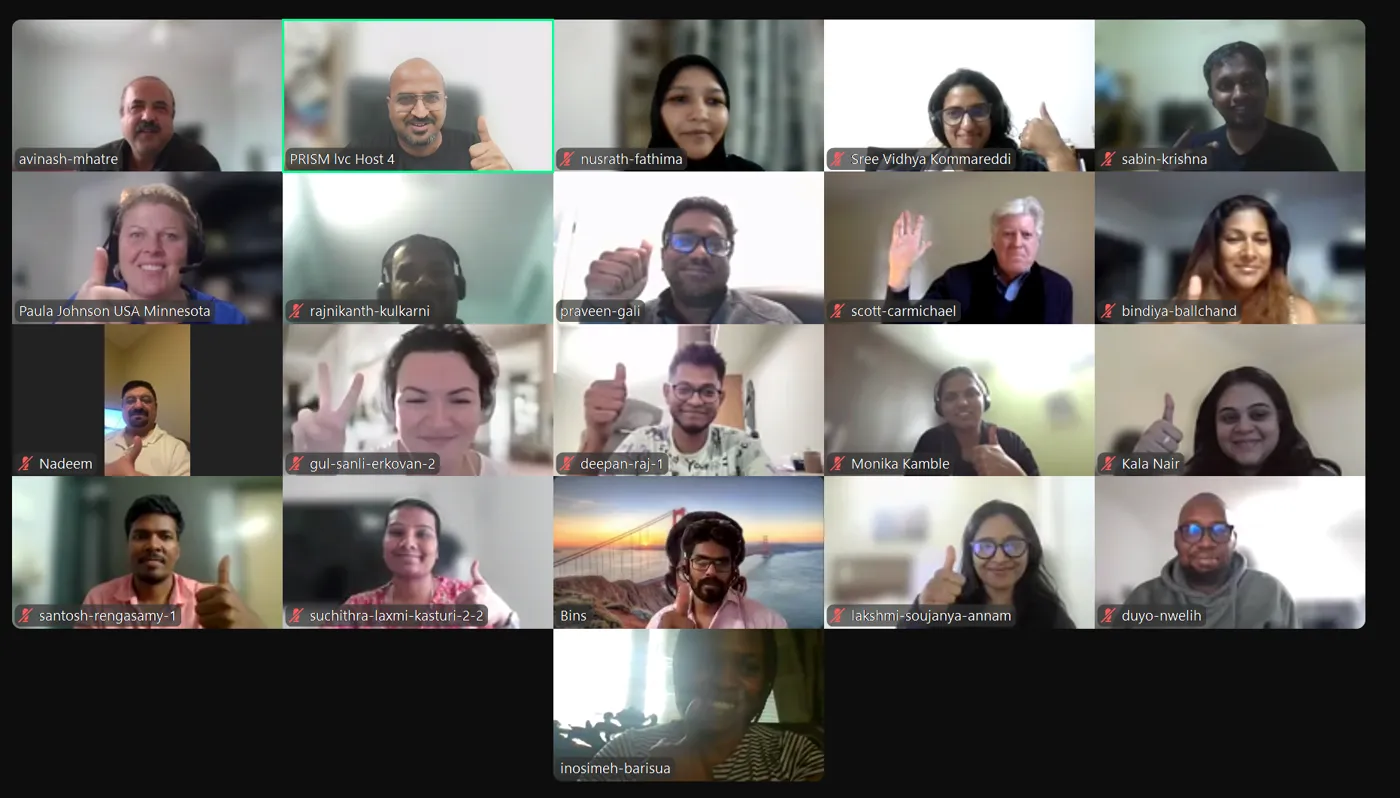
Sessions are led by Hitesh Motwani, an Anthropic Claude Certified trainer and author of Generative AI 360 (ZebraLearn). Over 200,000 professionals have been through his training, from executive programmes at IIM Bangalore to corporate teams across India, the Gulf and beyond. Below are photos from his past in-person sessions.



Your questions
Claude AI in Austria: common questions
Is Claude available in Austria?
Yes. Austria is on Anthropic’s supported countries list. Check the live list on anthropic.com before you purchase.
Does our works council have to agree before we roll out Claude?
If the company provides Claude centrally and it processes employee data such as usage logs, §96a ArbVG very likely requires a works agreement. Talk to the Betriebsrat early and agree the rules in writing.
Who is the data protection regulator in Austria?
The Datenschutzbehörde (DSB) in Vienna supervises GDPR and DSG compliance.
Where can we get official information on the AI Act in Austria?
The KI-Servicestelle at RTR publishes guidance and FAQs for companies on the AI Act.
Can Claude write in Austrian German?
Yes, if you ask for it. Tell Claude the audience is Austrian and list the terms you prefer. Store these in a Project instruction so you do not repeat them.
Is training needed under the AI Act?
Article 4 requires measures supporting AI literacy among staff who use AI systems. A documented training programme is the simplest way to show you took them.
How do you price training for Austrian companies?
Per session or per programme. We send a quote after a short call about group size and goals.
Plan Claude training for your Austrian team
Tell us how many people, which locations and what they should stop doing by hand. We reply within one working day with a suggested format and dates in Vienna time.