Home / Locations / Claude AI in Canada
Claude AI · Canada · Checked November 2026
Claude AI in Canada: privacy rules, French output and training across six time zones
Canadian teams tend to ask three things. Which privacy law applies when head office is in Toronto but half the customers are in Quebec? Is Claude’s French good enough for customer-facing work? And can one training plan cover St. John’s and Vancouver? Here is how we answer them.
Enquiries
Tell us about your team in Canada
Tell us which provinces your people work in and whether you need French examples, and we will suggest session times that fit your time zones.
Reply within one working day. No sales sequence, no mailing list.
Quick answer
Can Canadian organisations use Claude?
Access. Canada is on Anthropic’s supported countries and regions list. Check anthropic.com/supported-countries on the day you buy, since the list can change.
Billing. Check the currency shown at checkout for your plan. If you are billed in US dollars, budget for exchange-rate movement on an annual commitment.
Language. Claude writes Canadian English and French well. For Quebec French, tell it so explicitly: ask for Quebec terminology and the office’s own style guide, or you may get phrasing that reads as European. A francophone reviewer should sign off anything customer-facing.
Data. Federal law, provincial law and Quebec’s own regime can all apply to one company. The next section sorts them out.
Rules
Canadian privacy law in 2026: PIPEDA, the provinces and Quebec
PIPEDA still applies. The federal Personal Information Protection and Electronic Documents Act covers private-sector organisations in most provinces, and federally regulated businesses everywhere. The earlier reform bill, C-27, which included the proposed Artificial Intelligence and Data Act, died when Parliament was prorogued in January 2025. A new bill, C-36 (the Protecting Privacy and Consumer Data Act), was tabled on 15 June 2026. It would replace PIPEDA’s privacy rules and contains no AI-specific law. When we checked, it had not passed.
Provincial laws. Alberta and British Columbia have their own private-sector privacy acts (both called PIPA), which apply instead of PIPEDA for much provincial activity. Health information often falls under provincial health privacy acts, such as Ontario’s PHIPA.
Quebec Law 25. Quebec’s modernised private-sector law came in over three years. A privacy officer has been required since September 2022. Since September 2023, organisations must carry out a privacy impact assessment before communicating personal information outside Quebec, and for new information systems that handle personal information. Data portability followed in September 2024. A cloud AI tool processing Quebec residents’ data usually triggers that assessment.
We are trainers, not your legal counsel. Use this to frame the conversation with your privacy officer.
Run the PIA first (Quebec)
Any Claude use involving personal information of Quebec residents. The assessment looks at sensitivity, purpose, safeguards and the legal regime where the data is processed.
Strip before use
SINs, health card numbers, and names and contact details in client exports. Replace them with internal IDs.
Normal working material
Policies, procedures, public filings, RFPs and anonymised data, on a business plan where inputs are not used to train models.
Where it fits
Canadian sectors and their first Claude projects
Banks and insurers (Toronto)
OSFI’s revised Guideline E-23 on model risk takes effect on 1 May 2027 for federally regulated financial institutions and explicitly covers AI models. Good first work: inventorying AI use cases, drafting model documentation, and summarising policy changes for front-line teams.
Energy and resources (Calgary, mining head offices)
Summarising regulatory filings and environmental assessments, comparing joint-venture agreements, and drafting stakeholder and Indigenous engagement summaries for human review.
Federal and provincial public sector (Ottawa, Quebec City)
Briefing note drafts, bilingual summaries of long reports, and consultation response analysis, within your department’s own AI guidance.
Technology and AI firms (Montreal, Toronto, Waterloo)
Claude Code for engineering teams, security questionnaires, and grant and tax-credit documentation drafts.
Ports, rail and trade (Vancouver, Montreal)
Customs and shipping document checks, carrier contract comparisons, and incident report summaries.
Healthcare and life sciences
Patient-education material, grant applications and protocol summaries. Health records stay out unless your provincial health privacy obligations are met.
Example workflow
Illustrative: one notice, two official languages
This is an illustrative workflow from our sessions, not a client case study. A national insurer must send a policy-change notice to customers in every province. Legal has approved the English text. The French version has to say exactly the same thing and read naturally to Quebec customers.
The team puts the approved English notice, the company’s French glossary and two past French notices into a Claude Project. The instruction: translate into Quebec French using the glossary, keep the legal meaning identical, and produce a table of any terms where the glossary had no entry. A francophone reviewer checks the table and the draft, and legal compares the two versions side by side. The reviewer edits a draft instead of translating from scratch.
Formats
How Claude training works for Canadian teams
Live online, across Canadian time zones
Canada runs from Newfoundland (UTC-3:30, UTC-2:30 in summer) to Pacific (UTC-8, UTC-7 in summer). Most of Saskatchewan does not change its clocks. We agree times with you so that both Halifax and Vancouver can attend, or split the group into regional cohorts.
Leadership briefing
A 90-minute session for executives on capabilities, limits, the PIPEDA and Law 25 points above, and a scoped first pilot with an owner.
Onsite by arrangement
For a large group in one office, in-person delivery can be arranged around existing travel. We confirm onsite dates on the first call.
Sessions are delivered in English. For Quebec and bilingual teams we build exercises on your French documents and recommend a francophone colleague helps lead the French practice.
Your trainer
Your trainer
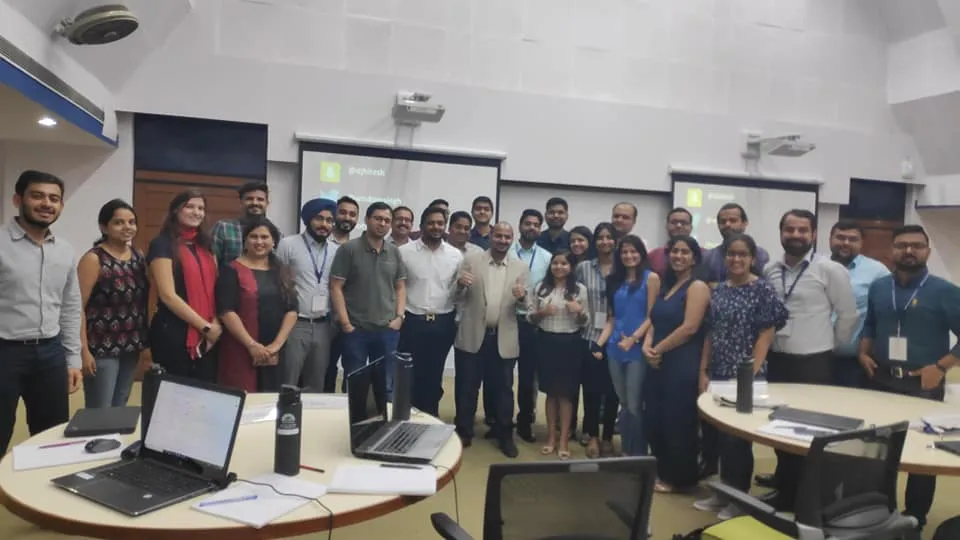
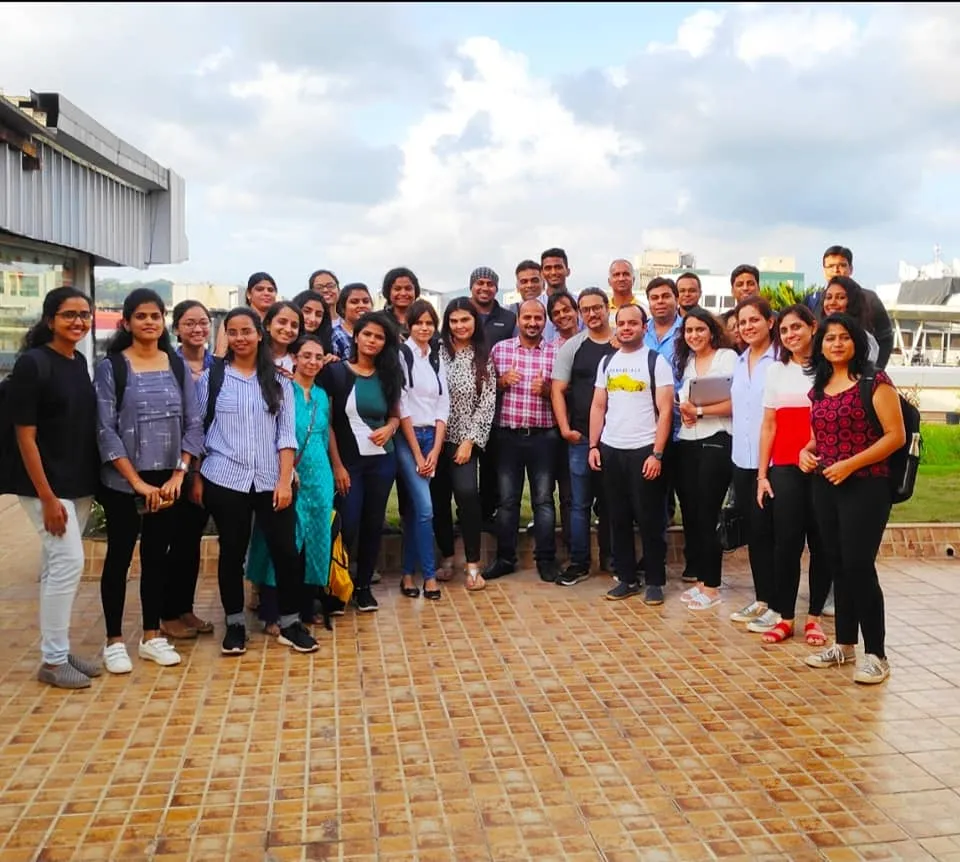
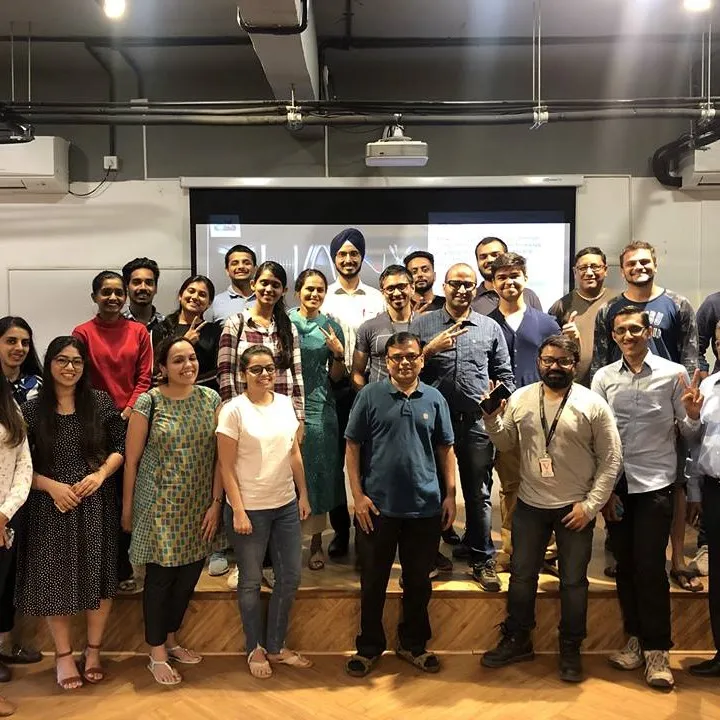
Hitesh Motwani runs the training. He is an Anthropic Claude Certified trainer, the author of Generative AI 360 (ZebraLearn), and has trained more than 200,000 professionals, including executive programmes at IIM Bangalore and corporate teams across India, the Gulf and beyond. These photos are from earlier in-person sessions.
Your questions
Claude AI in Canada: questions we hear
Is Claude available in Canada?
Yes. Canada is on Anthropic’s supported list. Check the current list before purchase, as Anthropic updates it.
Does Canada have an AI law we need to follow?
Not a federal one. The proposed Artificial Intelligence and Data Act died with Bill C-27 in January 2025, and the new privacy bill, C-36, does not include AI rules. Privacy law, sector guidance such as OSFI’s E-23, and public-sector directives are what apply today.
Do we need a privacy impact assessment for Claude in Quebec?
If personal information of Quebec residents will be processed outside Quebec, Law 25 generally requires one before the information is communicated. Your privacy officer should run it before rollout.
How good is Claude’s French?
Strong for drafting, summarising and translating. Ask for Quebec French and give it your glossary. A francophone reviewer should approve anything sent to customers or regulators.
We are a federally regulated bank. What changes in 2027?
OSFI’s Guideline E-23 on model risk management applies from 1 May 2027 and covers AI and machine-learning models. Build your inventory and documentation habits now, during the pilot.
Can you train our developers on Claude Code?
Yes, in a separate hands-on track on your own repository and review process.
Can one programme cover teams in Halifax and Vancouver?
Yes. We agree times that overlap both working days, or run regional cohorts with the same content.
Plan Claude training for your team in Canada
Tell us how many people, which provinces, and whether you need French material. We reply within one working day with a suggested format and times across your time zones.