Home / Locations / Claude AI in Costa Rica
Claude AI · Costa Rica · Checked November 2026
Claude AI in Costa Rica: Law 8968, free zone employers and training for bilingual teams
A large share of Costa Rica’s office and plant workforce already reports to a head office in the United States or Europe. So the question here is often two questions. Does headquarters allow Claude, and does Costa Rican law allow what headquarters allows? Add a data protection statute from 2011 with a reform bill still moving through the Asamblea Legislativa, and it is worth getting the facts straight before a pilot. They are set out here, with a description of our training.
Enquiries
Tell us about your team in Costa Rica
Share the site, the function and the group size. We suggest a format and dates on Costa Rica time, UTC-6 with no seasonal clock change.
Reply within one working day. No sales sequence, no mailing list.
Quick answer
Can teams in Costa Rica use Claude?
Supported: yes. Costa Rica is named on Anthropic’s supported countries page. Our check was on 10 November 2026. That page lists the places where claude.ai and the API are offered, without a separate list for each. Re-read it before you buy, since only Anthropic’s own page is current.
Currency. We know of no pricing in colones. Dollar card payments are routine for Costa Rican companies, so this is rarely a barrier. Ask finance how the charge and any tax on a cross-border digital service will appear on the card statement.
Spanish. Claude’s Spanish is reliable for business writing. Left alone it drifts toward neutral or peninsular phrasing, so give it a sample of your own text if you want Costa Rican usage, including usted in customer letters. English output is strong, which matters in bilingual service centres.
Data. Law No. 8968 governs personal data, and the regulator is PRODHAB. The law is older than the tools it now has to cover. Details are further down this page.
Law 8968
Costa Rica’s data protection law and where the reform stands
The statute is Law No. 8968, Protección de la Persona frente al Tratamiento de sus Datos Personales, published in La Gaceta on 5 September 2011. Executive Decree 37554-JP contains its regulation. Enforcement belongs to the Agencia de Protección de Datos de los Habitantes (PRODHAB), an agency attached to the Ministry of Justice and Peace.
What the law rests on. The central idea is informational self-determination: people are entitled to know what is collected about them and to give informed consent to its use. Sensitive data, such as health information, receives stronger protection. Legal guides also describe a registration duty with PRODHAB for certain databases and conditions on sharing personal data with third parties, including recipients abroad. Whether a given AI use meets those conditions is a question for your lawyer, because the 2011 text was not written with cloud AI in mind.
The reform bill. A comprehensive reform, legislative file 23.097, has been before the Asamblea Legislativa for several years. It received a majority committee report from the science and technology committee. On 17 October 2024 the plenary voted to send it back to the first-debate stage, and institutions including the Corte Plena and the Instituto Tecnológico de Costa Rica gave opinions on an updated text in 2025. We found no evidence in November 2026 that it has become law. If you read that Costa Rica has a new GDPR-style act in force, ask for the La Gaceta reference.
Corporate policy counts too. Subsidiaries of foreign groups usually inherit a global AI policy, and medical device plants add quality-system rules on top. The stricter rule wins.
We teach how to use the tool. We are not a law firm, and nothing here is legal advice.
Off limits
Cédula numbers, patient or complaint records that identify a person, salary data and credit information.
Anonymise first
Customer service tickets, HR case notes and supplier contact lists. Remove identifiers and keep the substance.
Good first material
Standard operating procedures, regulatory guidance, supplier quality agreements without personal details, and published tenders.
Sectors
Six parts of the Costa Rican economy and a use for each
Medical and precision devices are the country’s largest export by a wide margin. Procomer figures for 2025 put them at close to half of all goods exports, most of it made in free zone parks such as Coyol in Alajuela. Services for foreign groups and tourism follow. The examples reflect that mix.
Medical device manufacturing
Quality engineers compare a revised procedure with the previous version, draft a first summary of a nonconformance investigation from the records, and prepare bilingual training notes. Validated systems and final quality decisions stay outside the tool.
Shared services centres
Finance, HR and procurement teams serving a group’s other countries use Claude to draft process documentation, summarise policy updates and answer internal queries in English and Spanish from an approved knowledge base.
Free zone administration
Companies under the free zone regime file regular reports and keep incentive conditions under review. Claude helps turn the regulation and internal data into a checklist and a draft report for the compliance officer to verify.
Software and digital services
Developers in San José and Heredia work with Claude Code on client projects, and delivery managers use Claude for proposals, estimates and sprint summaries.
Tourism and hospitality
Hotels and tour operators in Guanacaste, the Central Pacific and Arenal draft guest replies in English, Spanish, German and French, and prepare evidence files for sustainability certification.
Agricultural exporters
Pineapple, banana and coffee exporters compare buyer specifications, summarise audit findings and prepare traceability documents for European and North American customers.
Example workflow
An illustrative case: procedure revision at a device plant in Alajuela
This is a teaching scenario that we wrote ourselves, and it involves no real company. Head office in the United States issues a revised English procedure for a packaging process. A quality specialist at the Costa Rican plant must identify what changed, update the local Spanish work instruction and brief two shifts.
With approval from her quality manager, and using a company account, she places the old procedure, the new one and the current Spanish instruction in a Claude Project. The request is specific: produce a table of every difference with section numbers, mark which steps of the Spanish instruction are affected, propose revised Spanish wording in the plant’s existing style, and write a one-page shift briefing. Anything unclear in the source must be listed as a question, not guessed.
The output is a draft. She verifies each change against the controlled documents, routes the revised instruction through formal document control and delivers the briefing herself. Review and sign-off happen exactly as the quality system requires. Only the comparison and first draft are faster.
Formats
Ways to run the training from Costa Rica
Live online at UTC-6
Costa Rica is on UTC-6 all year and does not observe daylight saving time. Its offset from US head offices therefore shifts by an hour twice a year, which we take into account when a group spans both.
Site leadership briefing
A session for general managers and function heads covering realistic uses, limits, the Law 8968 position and how to align a local pilot with group policy.
Onsite by arrangement
In-person training in the Central Valley is possible for larger groups. Timing is agreed with each client.
Delivery is in English, which suits most bilingual teams here. Practice files can be in Spanish, and participants are welcome to prompt in Spanish during exercises.
Your trainer
Who you will learn from
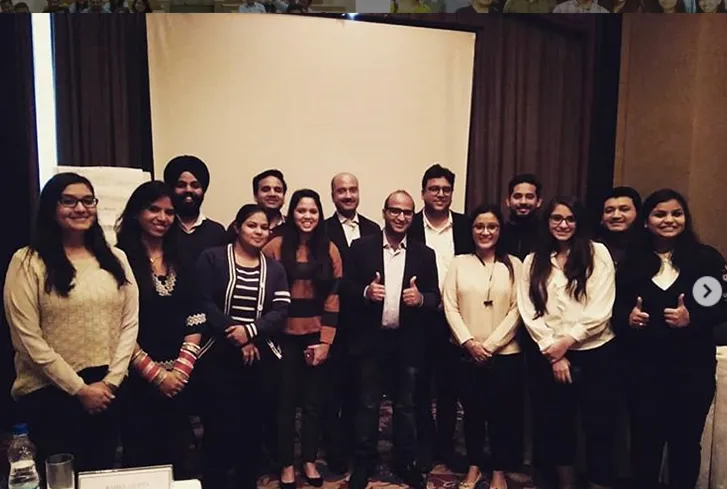
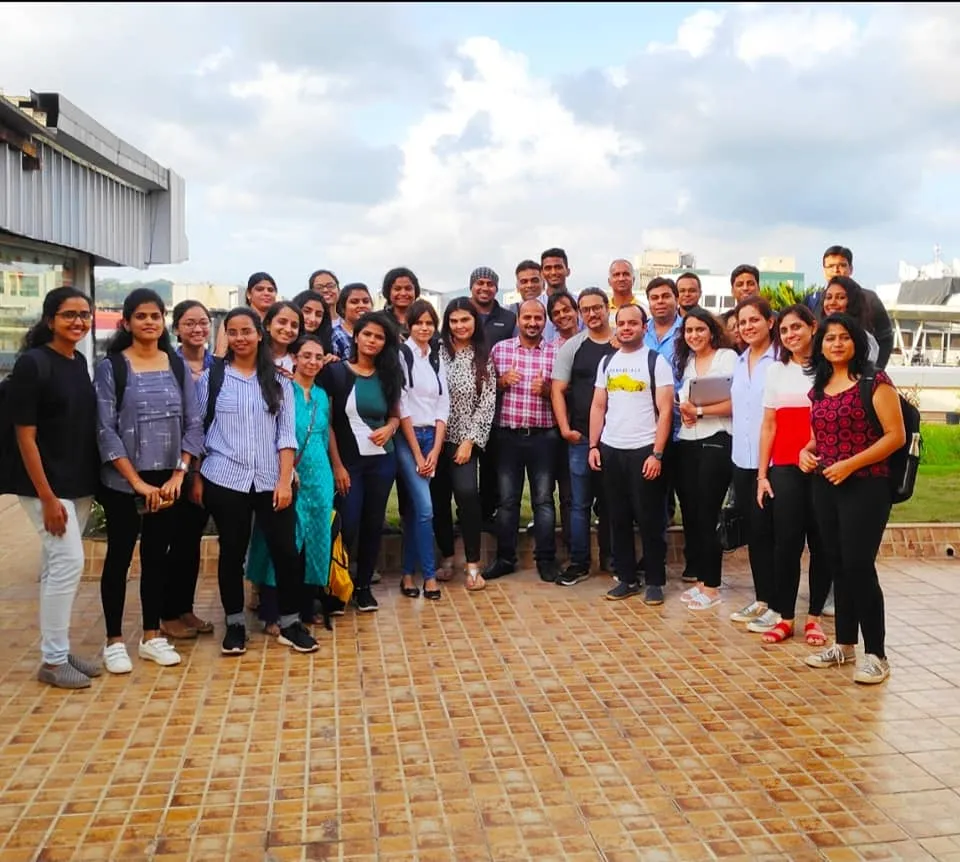
Hitesh Motwani teaches every session. He holds the Anthropic Claude Certified trainer credential, is the author of Generative AI 360 from ZebraLearn, and has trained 200,000+ professionals. That includes executive programmes at IIM Bangalore and corporate teams across India, the Gulf and beyond. The images here show past in-person sessions in India.

Questions and answers
Costa Rica: what teams ask before starting
Is Claude available in Costa Rica?
Yes. Anthropic’s supported countries page included Costa Rica on 10 November 2026, and the page applies to claude.ai and the API.
Is there billing in colones?
None that we know of. Companies pay by card, and dollar charges are common practice in Costa Rica.
Has Costa Rica replaced Law 8968?
No, not according to anything we could verify in November 2026. Reform file 23.097 was returned to first debate in October 2024 and was still being consulted on in 2025. Law 8968 of 2011 remains the text in force.
What does PRODHAB expect if we use an AI tool?
PRODHAB applies Law 8968 and its regulation: informed consent, protection of sensitive data and controls on passing data to third parties. Keep personal data out of prompts unless your lawyer has confirmed the basis for it.
Our parent company already has a Claude Enterprise plan. Do we still need local advice?
Yes. A group contract settles the commercial and security terms, but personal data of people in Costa Rica is still subject to Costa Rican law.
Can Claude be used in a regulated medical device process?
It can assist with reading, comparing and drafting. It should not replace validated systems, and every output that enters the quality system needs human review under your procedures. Agree the boundaries with quality assurance first.
Does Claude write Costa Rican Spanish?
It writes clear general Spanish and adapts when you provide examples of your house style. A local reader should still check customer-facing text.
What is the price of a programme?
Each programme is quoted after a short call on scope and group size. We do not sell by the seat.
Book Claude training for your team in Costa Rica
Let us know the site, the functions involved and whether a group policy already exists. We respond within one working day with a recommended format and dates on Costa Rica time.