Home / Locations / Claude AI in Germany
Claude AI · Germany · Checked November 2026
Claude AI in Germany: data protection, the works council and training that sticks
In German companies the Claude conversation rarely starts with features. It starts with the Datenschutzbeauftragte asking where prompts are stored, and the Betriebsrat asking whether the tool can be used to measure staff. This page answers those questions plainly, then shows how our live training works for Mittelstand firms and large groups alike.
Enquiries
Tell us about your team in Germany
Tell us which sites and departments are involved and whether your Betriebsrat is already in the loop. We propose dates in German time (CET/CEST).
Reply within one working day. No sales sequence, no mailing list.
Quick answer
Can a German company use Claude today?
Access. Yes. Germany is on Anthropic’s list of supported countries and regions. The list is updated from time to time, so check anthropic.com/supported-countries before a purchase decision and register seats with company email addresses.
Billing. Anthropic prices plans in local currency where it supports one, and VAT is applied according to your billing country. Enter your USt-IdNr. in the billing settings so the finance team receives invoices it can book.
Language. Claude writes solid business German and handles the switch between formal Sie and informal du when you tell it which one your house style uses. Technical German with long compound terms from engineering specs comes through well. Legal German still needs a lawyer’s read, as it would from any junior drafter.
Rules. Two sets of rules shape a rollout here: data protection (GDPR plus German supervisory practice) and employee co-determination under the Works Constitution Act. Both are covered below.
Rules
GDPR, the German authorities and the AI Act
German companies apply the GDPR together with the Federal Data Protection Act (BDSG). For most private companies the competent supervisor is the data protection authority of the Land where they are based, for example the BayLDA in Bavaria or the HmbBfDI in Hamburg. The BfDI supervises federal public bodies and certain sectors such as telecoms and postal services.
In May 2024 the Datenschutzkonferenz (DSK), the joint body of the federal and state authorities, published its orientation guide Künstliche Intelligenz und Datenschutz. It is written for companies choosing and deploying AI tools, and it is the document your data protection officer is most likely to hold you to. Read it before you write your internal AI policy.
The EU AI Act adds a training duty. Article 4 has applied since 2 February 2025. The Digital Omnibus on AI, in force since 27 July 2026, reworded it: providers and deployers must now take measures to support AI literacy among staff who use AI systems, rather than ensure a fixed level. The duty remains, and you will want records of what training you ran. In Germany, the KI-MIG implementation law came into force on 29 July 2026 and makes the Bundesnetzagentur the central AI market surveillance authority, with BaFin keeping AI used in regulated financial activities.
We are trainers, not your legal counsel. Use this as orientation and confirm details with your own Datenschutz and labour law advisers.
Mitbestimmung
The Betriebsrat question: why it comes up first
Under §87(1) no. 6 BetrVG, the works council has a co-determination right over technical systems that are suitable for monitoring employees’ behaviour or performance. German case law reads ‘suitable’ broadly, so a centrally provided AI tool that logs who prompted what usually falls under it.
In January 2024 the Labour Court of Hamburg (24 BVGa 1/24) found no co-determination right where staff used ChatGPT in the browser through their own private accounts and the employer received no usage data. Labour lawyers caution against reading too much into that decision. Once the company provides the tool itself, with admin consoles and usage logs, the usual view is that a works agreement is needed.
In practice this means a Claude Team or Enterprise rollout in a company with a Betriebsrat goes better when the works council sees the plan early, ideally with a draft Betriebsvereinbarung that covers which logs exist, who can see them, and a rule that they are not used for performance evaluation.
What to show the Betriebsrat
Which plan you use, what the admin console records, retention periods, who has admin rights, and what the training programme covers.
What to write down
A purpose limitation clause: usage data is for security and licence management, not for assessing individual performance.
How training helps
Running the same session for works council members as for staff removes a lot of suspicion. People object less to tools they have seen used.
Where it fits
German industries and the Claude tasks that pay off
Germany’s economy is weighted towards manufacturing and engineering exports, with a large Mittelstand of family-owned specialists. The tasks below are the ones we build sessions around.
Automotive and suppliers
Comparing a customer’s Lastenheft with your Pflichtenheft line by line, summarising 8D problem reports, and drafting supplier change notifications in German and English.
Machinery and plant engineering
Turning service technician notes into structured fault reports, drafting operating manual sections from engineering notes, and preparing tender responses for export customers.
Chemicals and pharma
Summarising regulatory and safety documentation for internal briefings, and drafting first versions of standard operating procedures for expert review.
Banking and insurance in Frankfurt and Munich
Reading long policy and product documents, comparing them against internal guidelines, and drafting clear customer letters. AI used for regulated financial activities also sits under BaFin’s oversight.
Logistics and the Hamburg port economy
Extracting data from shipping documents, summarising contract terms with carriers, and drafting customer updates when schedules change.
Mittelstand back offices
Small finance, HR and sales teams without specialists: reply drafts, meeting minutes, offer letters and price-list updates done in minutes instead of an afternoon.
Example workflow
Illustration: a supplier checks a customer specification with Claude
This is an illustrative workflow we use in training, not a client case study. A mid-sized supplier in Baden-Württemberg receives a 120-page Lastenheft for a new component from an OEM. The sales engineer has to confirm, requirement by requirement, what the company can meet, what needs clarification, and what is out of scope.
The team creates a Claude Project containing the Lastenheft, the company’s standard capability sheet and two previous Pflichtenhefte. The instruction: build a table with requirement number, our response (meets / partly / does not meet), the source document for that answer, and open questions for the customer. Claude produces a first table. The engineer then checks each row against the documents, corrects the ones Claude got wrong, and sends the open questions to the customer. The hard engineering judgement stays with the engineer. Claude removes the copying and cross-referencing.
Formats
How we train German teams
Live online in German time
Germany runs on CET (UTC+1) in winter and CEST (UTC+2) from the last Sunday of March to the last Sunday of October. We fit sessions into the German working day, typically as two to four shorter blocks rather than one long day.
Leadership and works council briefing
A 90-minute session for management, the data protection officer and works council members together: what Claude does, what it logs, where the risks are, and a pilot outline everyone has seen.
Onsite by arrangement
For larger groups at a plant or headquarters we can come in person. Dates depend on travel planning, so we agree them on the first call.
Sessions are delivered in English. Exercises use your own German documents, and participants prompt in German if they prefer. Claude answers in the language you write in.
Your trainer
Who leads the training
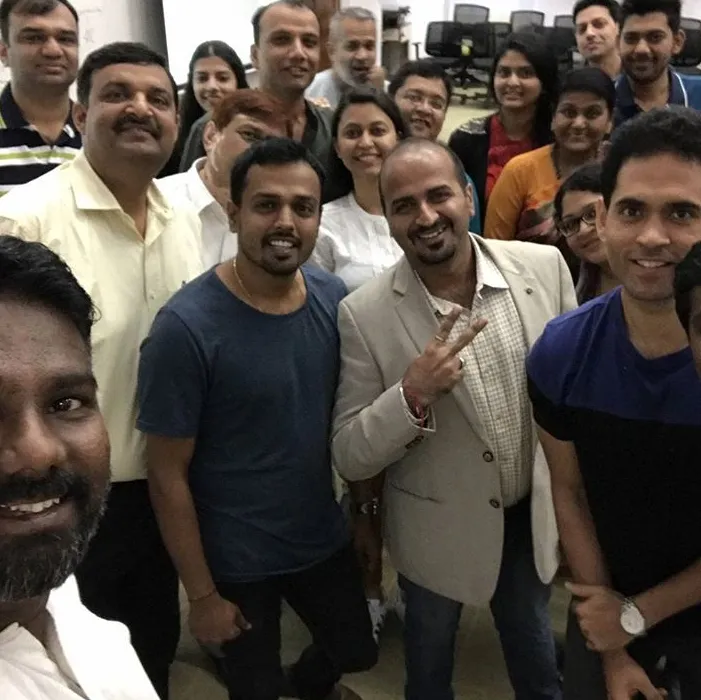
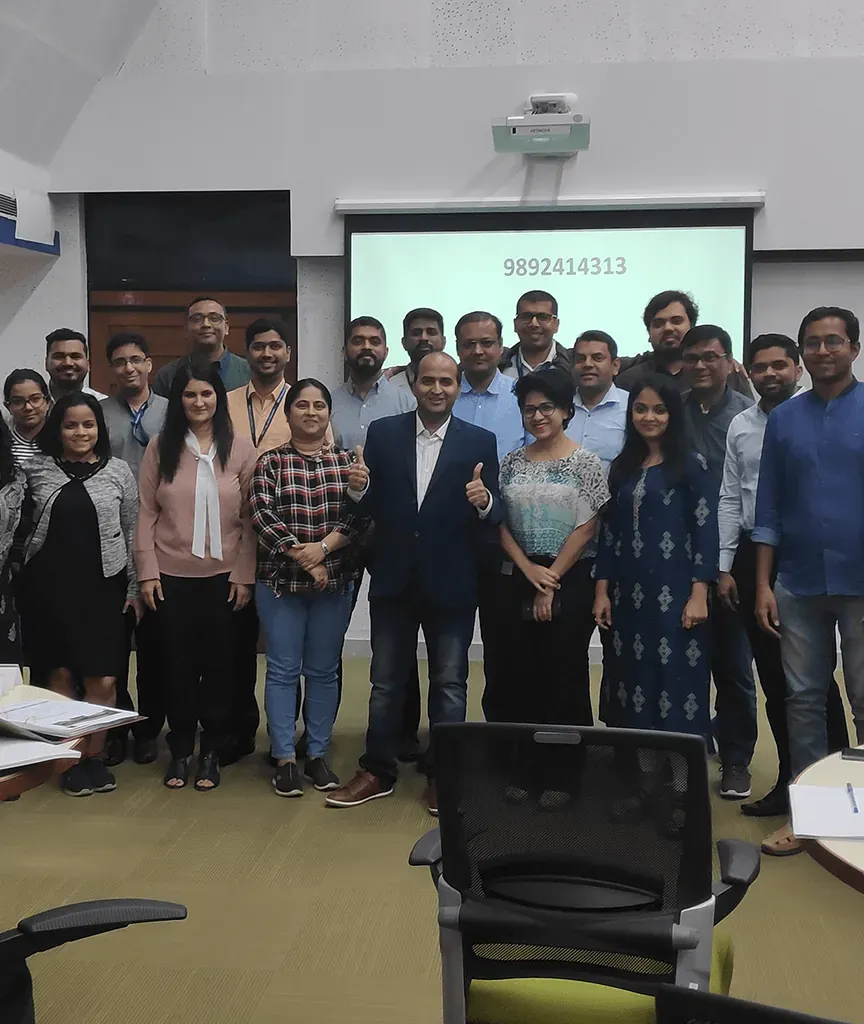
Your trainer is Hitesh Motwani, an Anthropic Claude Certified trainer and the author of Generative AI 360 (ZebraLearn). He has trained more than 200,000 professionals, including executive programmes at IIM Bangalore and corporate teams across India, the Gulf and beyond. The photos show some of his past in-person sessions.

Your questions
Claude AI in Germany: frequent questions
Is Claude GDPR-compliant for German companies?
No tool is compliant by itself. What matters is how you use it: a business plan with a data processing agreement, data minimisation in prompts, and a documented assessment by your data protection officer. The DSK’s 2024 orientation guide on AI is the usual reference point.
Do we need a Betriebsvereinbarung before rolling out Claude?
If you have a works council and the company provides Claude centrally with usage logs, it is very likely that §87(1) no. 6 BetrVG applies. Involve the Betriebsrat early and agree the rules in writing.
Does the AI Act require us to train staff?
Article 4 requires deployers to take measures supporting AI literacy among staff who use AI systems. It has applied since February 2025 and was reworded in July 2026, but not removed. Documented training is the simplest evidence.
Who supervises AI in Germany?
Under the KI-MIG, in force since 29 July 2026, the Bundesnetzagentur is the central AI market surveillance authority. BaFin keeps AI tied to regulated financial activities. Personal data questions stay with the data protection authorities.
How good is Claude’s German?
Good enough for internal drafts, summaries, customer replies and technical documentation. Have a native reviewer check anything legal, contractual or published.
Can we prompt in German during the training?
Yes. The trainer speaks in English, but participants can work in German throughout, and the exercises use German source documents.
How is training priced for a German company?
Per session or per programme, not per seat. We quote after a short call about group size, departments and goals.
Plan a Claude programme for your German team
Tell us the sites, the departments and where you are with the Betriebsrat and data protection review. We reply within one working day with a suggested format and dates in CET.