Home / Locations / Claude AI in Italy
Claude AI · Italy · Checked November 2026
Claude AI in Italy: what Law 132/2025 and the Garante mean for your team
Italy is the one EU country where a privacy regulator has already switched a chatbot off, and the first to pass its own AI law on top of the EU rules. So Italian managers rarely ask us whether Claude is clever. They ask whether the Garante will object, whether staff and clients have to be told, and whether the Italian it writes is fit to send. Those answers come first on this page. The training formats follow.
Enquiries
Tell us about your team in Italy
Give us the departments, the headcount and the documents people work on most. We come back with a format and dates in Italian time (CET/CEST).
Reply within one working day. No sales sequence, no mailing list.
Quick answer
Four things Italian companies ask before buying Claude
Is it available? Yes. Italy appears on Anthropic’s list of supported countries, so a company in Milan, Bologna or Bari can open an account directly. The list is kept at anthropic.com/supported-countries and it is worth a second look on the day you sign.
How is it billed? By card, monthly or annually. Anthropic’s help pages say prices appear in local currency where that is supported and in US dollars otherwise, so read the checkout screen to see whether your invoice will be in euros before the purchase order is raised.
How good is the Italian? Good enough for client letters, minutes, tender answers and internal procedures, and the app menus can be set to Italian. It handles the formal Lei register well. Where it needs a human is bureaucratic formulae for filings with public bodies, and anything in dialect.
What about the law? Three layers apply: the GDPR with the Italian Privacy Code, the EU AI Act, and Italy’s own Law 132/2025. The next section takes them in turn.
Rules
GDPR, the Garante, the EU AI Act and Law 132/2025
Privacy. The GDPR applies together with the Privacy Code (Legislative Decree 196/2003 as amended). The supervisor is the Garante per la protezione dei dati personali, and it has been more active on generative AI than any of its EU peers. It temporarily restricted ChatGPT in spring 2023 and ordered DeepSeek to stop processing Italian users’ data on 30 January 2025. Its 15 million euro fine against OpenAI was annulled by the Court of Rome in March 2026, on grounds reported as jurisdictional. For an Italian employer the lesson is to keep the legal basis and the transparency notice for any AI tool on file.
EU AI Act. Article 4 on AI literacy has applied since 2 February 2025. The Digital Omnibus on AI, in force since 27 July 2026, reworded it: employers that use AI must take measures to support the AI literacy of their staff. The same package moved the stand-alone high-risk obligations to 2 December 2027. Using Claude to screen candidates or score employees would need a legal review first; ordinary drafting and summarising is a different category.
Law 132/2025. Italy’s AI law of 23 September 2025 has been in force since 10 October 2025. Two articles touch ordinary office use. Article 11 requires the employer to inform workers when AI is used in the employment relationship, by reference to the transparency rules of Legislative Decree 152/1997. Article 13 says that in the intellectual professions AI may only be used for instrumental and support tasks, and that the professional must tell the client about it. The law names AgID and the national cybersecurity agency ACN as the AI authorities, while Banca d’Italia, CONSOB and IVASS keep their supervision of financial firms.
This is a trainer’s reading of the rules, not a legal opinion. Ask your DPO or lawyer how the pending implementing decrees affect you.
Leave out
Codice fiscale numbers, health and trade-union data, payslips, disciplinary files and anything about a named client that your engagement letter does not cover.
Clean up first
CRM exports, complaint logs and supplier lists with contact names. Swap the identifiers for codes and keep the key in your own systems.
Normally fine
Technical manuals, published tenders, product sheets, draft policies and anonymised figures, on a Team or Enterprise plan where your content is not used to train the models by default.
Where it fits
Italian industries and the tasks we see first
Italy’s economy is built on mid-sized, export-heavy manufacturers and the professionals who serve them. That shapes the work: a lot of translation between Italian and a customer’s language, a lot of technical paper, and small teams with no spare analyst.
Machinery and automation
Builders of packaging, machine-tool and food-processing lines in Emilia-Romagna, Lombardy and Veneto: answering foreign requests for quotation from Italian specifications, and turning service reports into fault summaries.
Fashion, leather and furniture
Milan showrooms, Tuscan leather districts and Brianza furniture makers: product copy in five languages from one approved Italian sheet, and buyer compliance questionnaires on materials and suppliers.
Banks and insurers
Teams in Milan, Turin and Trieste: comparing Banca d’Italia and IVASS communications with internal rules, and summarising long policy documents for branch staff, using documents without customer identifiers.
Food and wine exporters
Consortia and producers of protected-origin products: label and specification checks against importer requirements, and distributor correspondence in English and German.
Studi professionali
Commercialisti, labour consultants and law firms: first drafts of client memos and comparison of contract versions, kept within the support role and client disclosure that Article 13 expects.
Example workflow
An illustration: a Bologna machine builder answers a German RFQ
We made this scenario up for teaching. It is not a client story. A packaging-machine builder near Bologna receives a 30-page request for quotation in German. The technical answers sit in Italian: the machine specification, a risk assessment, and the notes of the last installation at a similar plant.
The sales engineer puts the request and the three Italian sources into a Claude Project. The instruction is short: list every requirement in the request, state whether our documents meet it, cite the page, and write “not found” where they are silent. Claude returns a compliance table in Italian for the engineer and a draft reply in German for the customer. The engineer spends the time on the eleven “not found” rows, which are the real commercial decisions, and a German-speaking colleague reads the reply before it leaves. Pricing and delivery terms never go into the prompt.
Formats
Ways to run the training with an Italian team
Live online in Italian time
Italy keeps CET (UTC+1) in winter and moves to CEST (UTC+2) between the last Sunday of March and the last Sunday of October. We schedule inside that working day and break the programme into shorter blocks, with practice on your own files in between.
Briefing for owners and directors
A single session for the people who sign off the tool: what Claude does well, what should stay out of it, and how Articles 11 and 13 of Law 132/2025 and the AI literacy duty translate into a short internal policy.
Onsite by arrangement
In-person delivery at your premises is possible for larger groups. It depends on travel planning, so dates are agreed on the first call and not promised here.
Sessions are delivered in English. Exercises use your Italian documents, and people are free to prompt in Italian. If part of the group is not comfortable in English, put a bilingual colleague in the room.
Your trainer
Who you will be working with
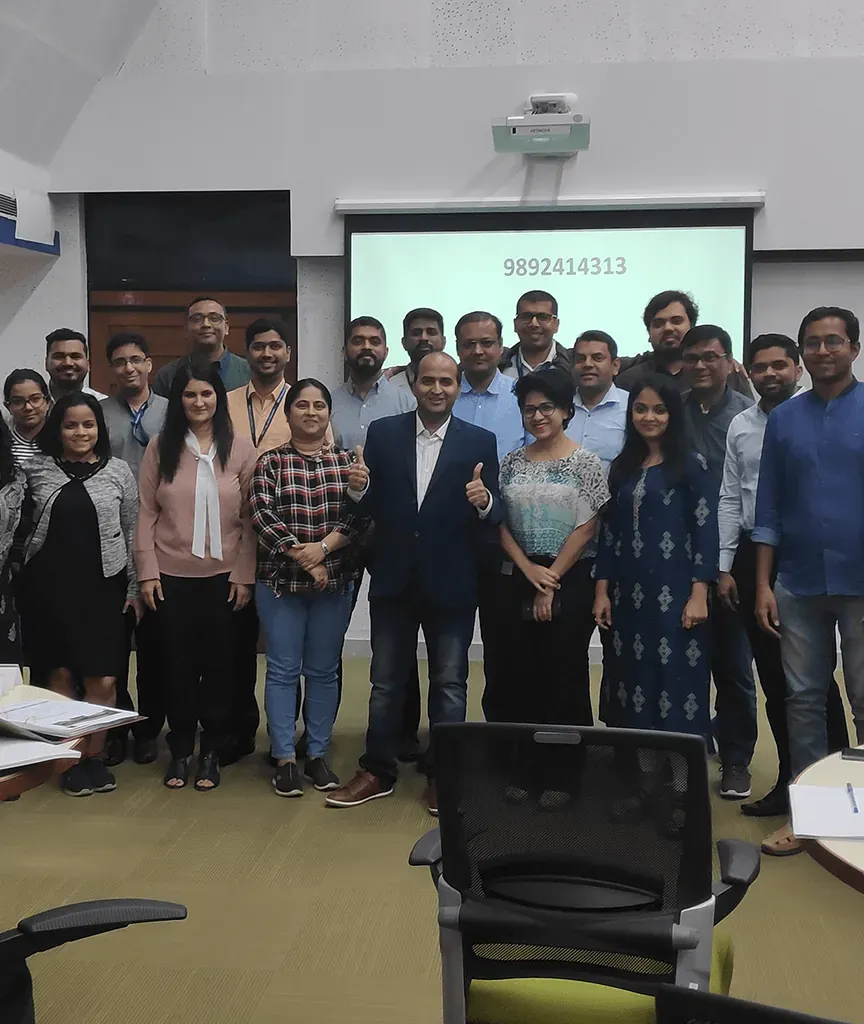
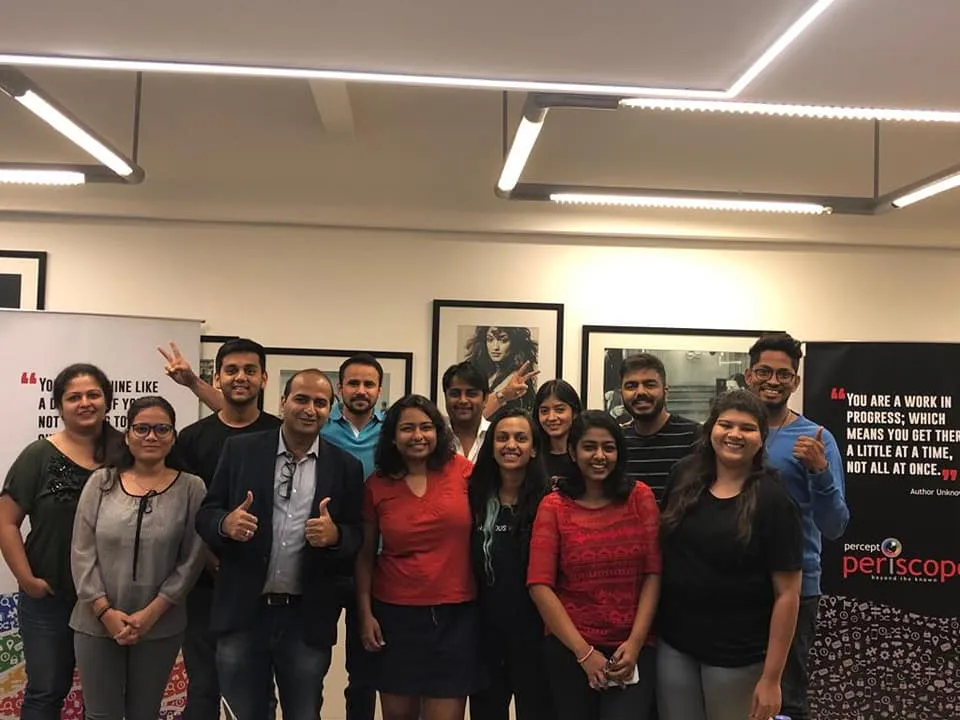
Your trainer is Hitesh Motwani. He is an Anthropic Claude Certified trainer and the author of Generative AI 360 (ZebraLearn), and has trained 200,000+ professionals, including executive programmes at IIM Bangalore and corporate teams across India, the Gulf and beyond. These pictures come from earlier classroom sessions of his.

Your questions
Claude AI in Italy: what people ask us
Has the Garante banned Claude in Italy?
No. We found no Garante measure against Claude at the time of checking. The authority has acted against other AI services, which is a reason to keep your own privacy paperwork in order, not a reason to avoid the tool.
Do we have to tell employees that we use AI?
Article 11 of Law 132/2025 requires employers to inform workers about AI used in the employment relationship, following the transparency rules in Legislative Decree 152/1997. Your labour consultant can tell you what form the notice should take in your case.
I am a commercialista. Can I use Claude for client work?
Article 13 allows AI in the intellectual professions for instrumental and support tasks, with the professional’s own work prevailing, and it requires you to inform the client. Many firms add a line to the engagement letter.
Does training with you satisfy the EU AI literacy duty?
It is one of the measures an employer can take and document under Article 4. We give you an attendance record and the session outline. Whether that is enough for your organisation is a question for your compliance function.
Will Claude write correct formal Italian?
Yes for business correspondence and reports. Give it a sample of your house style. Have a native speaker check filings, notarial wording and anything addressed to a public body.
Can we pay in euros with an Italian VAT invoice?
Anthropic states that local-currency pricing is shown where supported. Check the checkout and billing settings for currency and tax details, and ask Anthropic’s sales team about invoicing terms on larger plans.
Do you teach Claude Code to Italian software teams?
Yes, as a separate practical track for developers that uses your own repositories and review rules.
What does a programme cost?
We quote per programme after a scoping call, based on the number of sessions and the preparation involved. There is no public price list.
Start the conversation about your Italian team
Send us the size of the group, the functions involved and two or three tasks you would like to speed up. You get a reply within one working day with a suggested programme and dates in Italian time.