Home / Locations / Claude AI in Japan
Claude AI · Japan · Checked November 2026
Claude AI in Japan: APPI rules, keigo quality and training for working teams
Japanese companies rarely ask us whether Claude is clever. They ask whether its Japanese is polite enough to send to a customer, whether the personal information law allows customer records in a prompt, and how to introduce it in a workplace where senior staff are close to retirement and their knowledge is not written down. This page takes those three in order.
Enquiries
Tell us about your team in Japan
Give us the department, the head count and the paperwork that eats the most hours. We reply with a format and dates on Japan Standard Time (UTC+9).
Reply within one working day. No sales sequence, no mailing list.
Quick answer
Is Claude offered in Japan, and is it ready for Japanese office work?
Availability. Yes. We checked Anthropic’s supported countries page on 11 November 2026 and Japan is on it. The page covers Claude.ai and the API. Anthropic also opened a Tokyo office in October 2025.
Payment. We do not state a billing currency here because it can differ by plan and change over time. Look at the currency and tax line on the checkout screen before buying seats for a whole department.
Japanese. Reading is strong: long contracts, meeting minutes and specifications are summarised accurately enough for a reviewer to work from. Writing is good in plain です・ます style. Honorific business writing is where care is needed, and we give it a full section below.
Personal data. The Act on the Protection of Personal Information (APPI) applies as soon as a prompt contains details of an identifiable person. An amendment was enacted in 2026 and is being phased in.
Rules
The APPI, its 2026 amendment and Japan’s soft-law approach to AI
What applies today. The APPI (個人情報保護法) is enforced by the Personal Information Protection Commission (PPC). Two of its ideas matter most for an AI rollout. A business must stay within the purpose of use it told people about. And handing personal data to a third party located in a foreign country has its own conditions. Anthropic is a US company, so both come up the moment someone pastes a customer list into a chat.
The PPC has already spoken on generative AI. On 2 June 2023 it published a notice for businesses using these services. In short: check that any personal information you enter falls within your stated purpose of use, and confirm that the provider does not use that input for machine learning.
The amendment. The Cabinet approved an APPI amendment bill on 7 April 2026. According to law-firm reports, the Diet passed it on 10 July 2026 and it was promulgated on 17 July 2026 as Act No. 56 of 2026. The main changes are reported to start on a date fixed by Cabinet Order within two years of promulgation. They include a PPC power to order monetary surcharges for serious violations, guardian consent for children under 16, and a consent exception for creating statistics that can extend to AI development. We have not read the Japanese text ourselves, and PPC rules will settle the detail.
AI-specific law and guidance. The AI Promotion Act was passed in May 2025 and came fully into effect on 1 September 2025. Commentators describe it as a framework law without direct penalties for companies. The practical document is the AI Guidelines for Business, issued jointly by METI and MIC in April 2024 and revised since. Secondary sources report a version 1.2 dated 31 March 2026 that adds AI agents. It is voluntary, but a Japanese auditor or customer is likely to cite it.
Hitesh and his team teach people to use Claude. We do not give legal advice, so please confirm all of this with your own counsel or your privacy officer.
Do not enter
My Number, bank account details, health check results, personnel evaluations, and customer records collected for a different purpose than the one you now have in mind.
Anonymise before use
Inquiry logs, claim histories and sales ledgers. Replace names, addresses and phone numbers with codes, and keep the lookup table in your own system.
Ordinary material
Work standards, public tender documents, your own product manuals, draft press releases and meeting notes without personal details, on a plan your information-systems department has approved.
Japanese language
Keigo: how far you can trust Claude with honorific Japanese
Claude knows the three layers of keigo: respectful 尊敬語 for the other party’s actions, humble 謙譲語 for your own, and polite 丁寧語. What it cannot know unless you say so is the relationship. Is the reader a customer or a colleague? Higher or lower in rank? State those facts in the prompt and the register improves sharply.
The errors we see are the ones a new graduate makes. Double honorifics (二重敬語). Humble forms applied to the customer’s actions. A tone so stiff that it reads like a legal notice. A Japanese reviewer catches these in a minute, and that review step should stay.
Three habits help. Give Claude two or three of your own past emails as a style sample. Tell it which form to use: です・ます for correspondence, である for reports. And ask it to list every keigo choice it was unsure about under the draft. Check era-calendar dates and the kanji of personal names by hand.
Where it fits
Japanese industries and the paperwork Claude can take on
Automotive suppliers in Aichi and the wider Tokai region
Turning a carmaker’s quality requirements into a checklist for the line, drafting corrective-action reports in Japanese and English from the same facts, and comparing drawing change notices revision by revision.
General trading houses (総合商社)
Summarising long offtake, shipping and joint-venture contracts written in English for a Japanese-language internal approval paper (稟議書).
Banks and insurers
Comparing Financial Services Agency publications with internal manuals, rewriting policy wording into plain Japanese for customers, and preparing English summaries for overseas investors.
Back offices with a retiring workforce
General affairs, accounting and HR teams where one veteran knows how the month-end really works. Claude turns interview notes and old spreadsheets into written procedures a successor can follow.
System integrators and in-house IT
Claude Code for reading and documenting old systems, writing tests before a migration, and producing design documents in the format the customer expects.
Example workflow
Illustrative: capturing a veteran’s month-end routine before retirement
This is a teaching example from our sessions, not a client case study. Picture the accounting section of a parts maker near Nagoya. The person who has closed the books for twenty years retires in March, at the end of the fiscal year. Her method lives in her head and in Excel files with unexplained colour codes.
A younger colleague interviews her for an hour a week and records the answers as rough notes. The notes, the spreadsheets with personal and supplier bank details removed, and last year’s closing calendar go into a Claude Project. The standing instruction is simple: write each task as a numbered procedure, say which file and which cell range it uses, and list every step where the notes do not explain why something is done.
The list of unexplained steps becomes the agenda for the next interview. After a few rounds the section has a procedure manual that the veteran herself has corrected.
Formats
Session formats for teams in Japan
Live online on JST
Japan Standard Time is UTC+9 and the country does not change its clocks. Sessions are placed within your office day and broken into shorter blocks, with real work to try between them.
Briefing for management
A compact session for directors and department heads. It covers what Claude does well and badly in Japanese, the APPI questions above, and how to choose a first pilot.
Onsite by arrangement
In-person delivery in Japan is possible for larger groups and is planned case by case.
Sessions are delivered in English and are online by default. The exercises use your own Japanese documents. If part of the group is less comfortable in English, plan for a bilingual colleague to sit in. Groups with sister offices elsewhere in Asia can also read our pages for Taiwan and Vietnam.
Your trainer
About the trainer
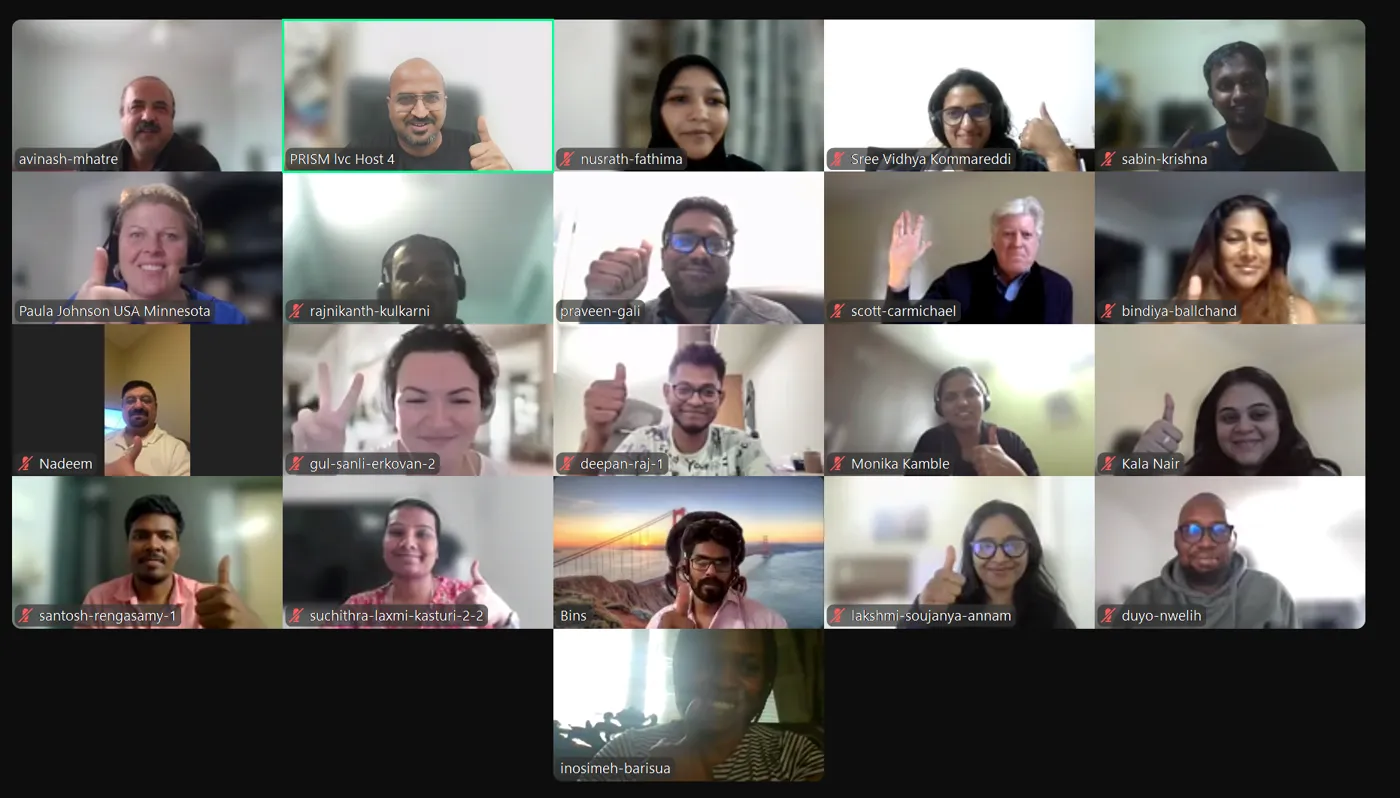
The sessions are taught by Hitesh Motwani. He is an Anthropic Claude Certified trainer and the author of Generative AI 360 (ZebraLearn). He has trained 200,000+ professionals, including executive programmes at IIM Bangalore and corporate teams across India, the Gulf and beyond. None of the three photos below was taken in Japan; they show earlier classroom programmes.



Your questions
Claude AI in Japan: what people ask us
Can a company in Japan sign up for Claude and the API?
Yes. Japan is on Anthropic’s supported countries page, which covers Claude.ai and the API. We last looked on 11 November 2026.
Does Anthropic have an office in Japan?
Yes. Anthropic announced the opening of its Tokyo office on 29 October 2025. We are an independent training provider and are not part of Anthropic.
Can Claude write keigo that is safe to send to a customer?
It writes a solid draft when you tell it who the reader is and how formal to be. Keep a Japanese reviewer for anything external, especially apologies, refusals and first-contact emails.
Is the 2026 APPI amendment already in force?
According to law-firm summaries it was promulgated on 17 July 2026, with the main changes starting on a date set by Cabinet Order within two years. Ask your counsel which provisions apply to you and when.
Is the training given in Japanese?
No. Instruction is in English. Exercises run on your Japanese documents, and a bilingual colleague in the room helps a mixed group.
Arrange Claude training for your team in Japan
Write to us with the department, the number of people and one task you would like to shorten. You will hear back within one working day with a proposed format and times in JST.