Home / Locations / Claude AI in the UAE
Claude AI · United Arab Emirates · Checked November 2026
Claude AI in the UAE: availability, data law and team training
UAE companies rarely ask whether they should use AI. The national strategy settled that years ago. What they ask us is narrower: which data law applies to our entity, how good is the Arabic, and how do we get fifty people using Claude the same way instead of fifty different ways. This page covers the national picture. For city detail, see our Dubai and Abu Dhabi pages.
Enquiries
Tell us about your team in the UAE
Say which emirate and which free zone or mainland entity you are in. We reply with a format and dates on Gulf Standard Time (UTC+4).
Reply within one working day. No sales sequence, no mailing list.
Quick answer
Can UAE businesses buy and use Claude today?
Access. Yes. The United Arab Emirates is on Anthropic’s list of supported countries and regions. The list is updated from time to time, so confirm it on anthropic.com/supported-countries before you commit to a team rollout.
Billing. Plans are paid by card and priced in US dollars, so check the currency your finance team sees at checkout and whether your corporate card adds a foreign-transaction fee on top of the AED equivalent.
Arabic. Anthropic’s own multilingual benchmark scores Claude’s Arabic at around 98 to 99 per cent of its English result on the larger current models. That is a test of understanding, not of polished writing. In practice Modern Standard Arabic drafts are good, and Emirati dialect, poetry and fully vowelled text need a native reviewer.
Data. The UAE has three overlapping data regimes, not one. Which one applies depends on where your entity is licensed. That is the section most teams skip, and it is the one that decides what can go into Claude.
Data rules
Three data regimes: federal PDPL, DIFC and ADGM
Federal PDPL. Federal Decree-Law No. 45 of 2021 on the Protection of Personal Data came into force on 2 January 2022. It covers mainland companies and most free zones. It does not cover government data, and it leaves health and banking data to their own sector laws where those exist. Its executive regulations, which should define cross-border transfer conditions and breach reporting in detail, had still not been issued as of mid-2026. In June 2026 the UAE announced a Federal Authority for Artificial Intelligence and Data, which absorbs the UAE Data Office and is widely expected to finalise those regulations.
DIFC. Companies licensed in the Dubai International Financial Centre follow DIFC Data Protection Law No. 5 of 2020, in force since 1 July 2020 and supervised by the DIFC Commissioner of Data Protection. Its Regulation 10 adds specific duties for personal data processed by autonomous and semi-autonomous systems, which includes AI tools.
ADGM. Companies in Abu Dhabi Global Market follow the ADGM Data Protection Regulations 2021, overseen by the ADGM Office of Data Protection. They are closely modelled on the EU GDPR, including 72-hour breach notification to the regulator.
So a Dubai mainland trading company, a DIFC asset manager and an ADGM fintech can sit twenty minutes apart and answer the same Claude question differently. We are trainers, not your legal counsel. Use this as a map, and get your DPO or legal adviser to confirm the rules for your licence.
Keep out of Claude
Emirates ID numbers, passport copies, salary files, patient records and bank account data. Health and banking data also carry sector rules on top of the PDPL.
Clean up first
CRM exports, tenant lists and HR spreadsheets. Swap names and phone numbers for reference codes before anyone uploads them.
Generally workable
Policies, public tenders, market reports, product catalogues and anonymised financials, on a Team or Enterprise plan where your data is not used to train models.
National picture
Where UAE teams put Claude to work
The UAE National Strategy for Artificial Intelligence 2031 set the direction at federal level, and Abu Dhabi’s Government Digital Strategy 2025-2027 aims for AI-native government services by 2027. In companies, value shows up in a few repeatable places.
Financial services
Comparing DFSA, FSRA or Central Bank circulars against internal policy, summarising credit papers, and drafting client letters in English and Arabic from one approved source.
Real estate and property management
Reading tenancy contracts, service-charge statements and developer payment plans side by side, then producing a plain summary for a client call.
Logistics and free-zone trade
Turning shipping documents, HS-code queries and supplier emails into structured trackers for teams working out of Jebel Ali, Khalifa Port or the airport free zones.
Energy and industry
Condensing long technical, HSE and tender documents into decision notes for managers who will not read 200 pages.
Government and semi-government
Drafting bilingual circulars, summarising consultation responses and preparing briefing packs, with sensitive data kept out of scope.
Hospitality and retail
Guest communication in several languages, review responses, and product copy for the large expatriate customer base, checked by a person before sending.
Example workflow
Illustration: a bilingual policy update for a UAE employer
This is an illustrative exercise we run in sessions, not a client story. An HR team needs to update its leave and remote-work policy after a change in federal labour guidance, and publish it in English and Arabic.
The team creates a Claude Project with the current English policy, the official guidance and the company’s tone notes. Claude produces a tracked list of changes with a source for each, then a revised English draft. A second step asks for Modern Standard Arabic in the register the company already uses, with a glossary of fixed terms such as job titles and leave types. An Arabic-speaking HR officer reviews the Arabic, the legal team checks the changes list, and nothing is published without both sign-offs. The draft no longer starts from a blank page in two languages.
If the employer has a DIFC or ADGM entity as well as a mainland one, the same Project can hold a short note on which data regime each entity follows, so HR staff in each entity know what they may upload.
Formats
How we deliver Claude training across the Emirates
Live online on Gulf Standard Time
The UAE is on UTC+4 all year, with no daylight saving. Sessions fit inside the working day, usually in half-day blocks spread over a week so people can practise between them. We plan around the federal Saturday-Sunday weekend, which many private employers also follow, and shorter Friday hours.
Leadership briefing
Ninety minutes for directors and heads of department: what Claude does well, where it fails, which data regime applies to you, and a written pilot plan to take away.
Onsite by arrangement
Hitesh delivers in the UAE, so in-person sessions in Dubai or Abu Dhabi are realistic for larger groups. We agree venue, dates and group size on the first call.
Sessions are delivered in English. Exercises use your own documents, Arabic ones included, and for mixed groups we suggest an Arabic-speaking colleague reviews outputs live in the room.
Your trainer
Who leads the training
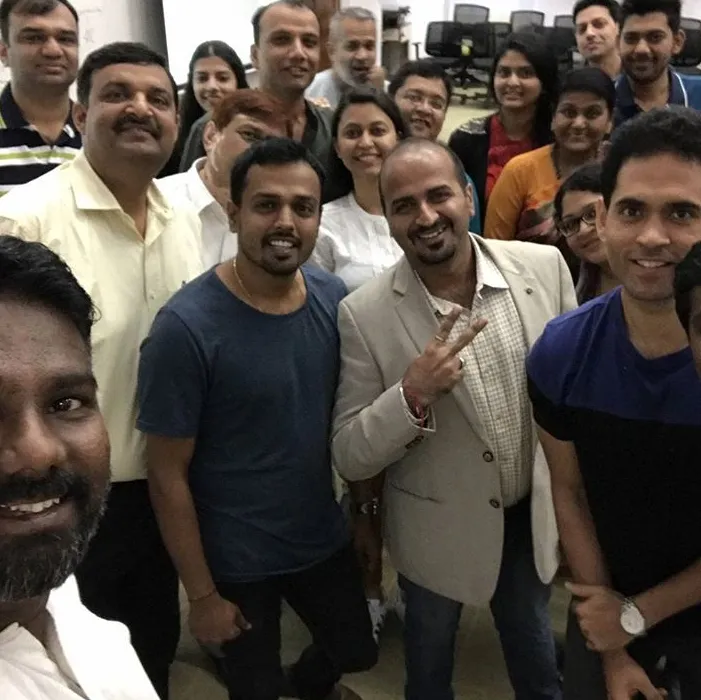
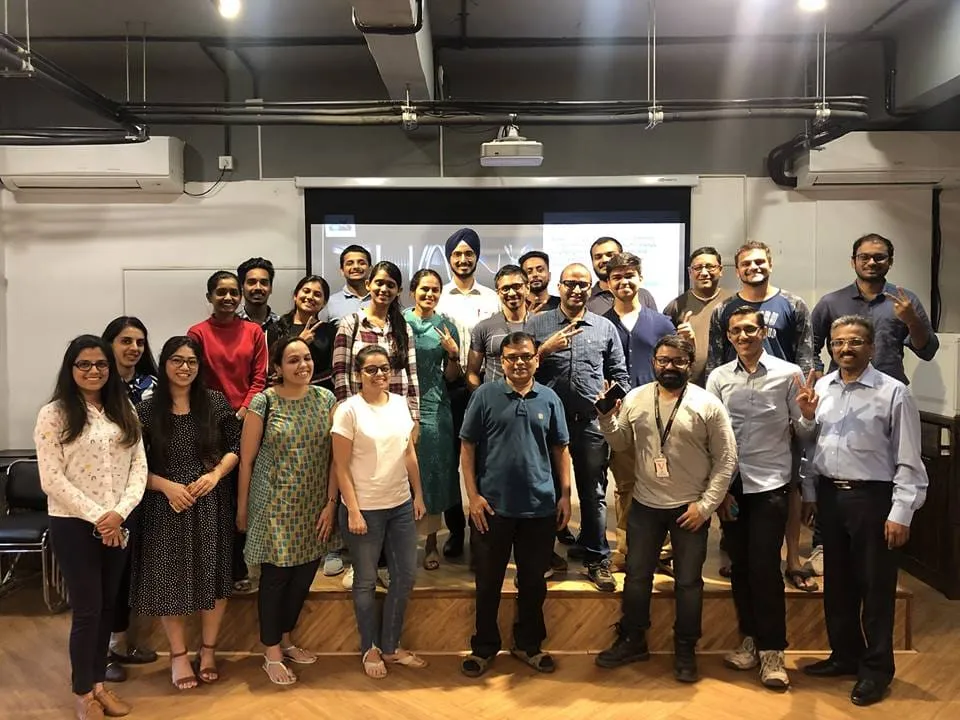
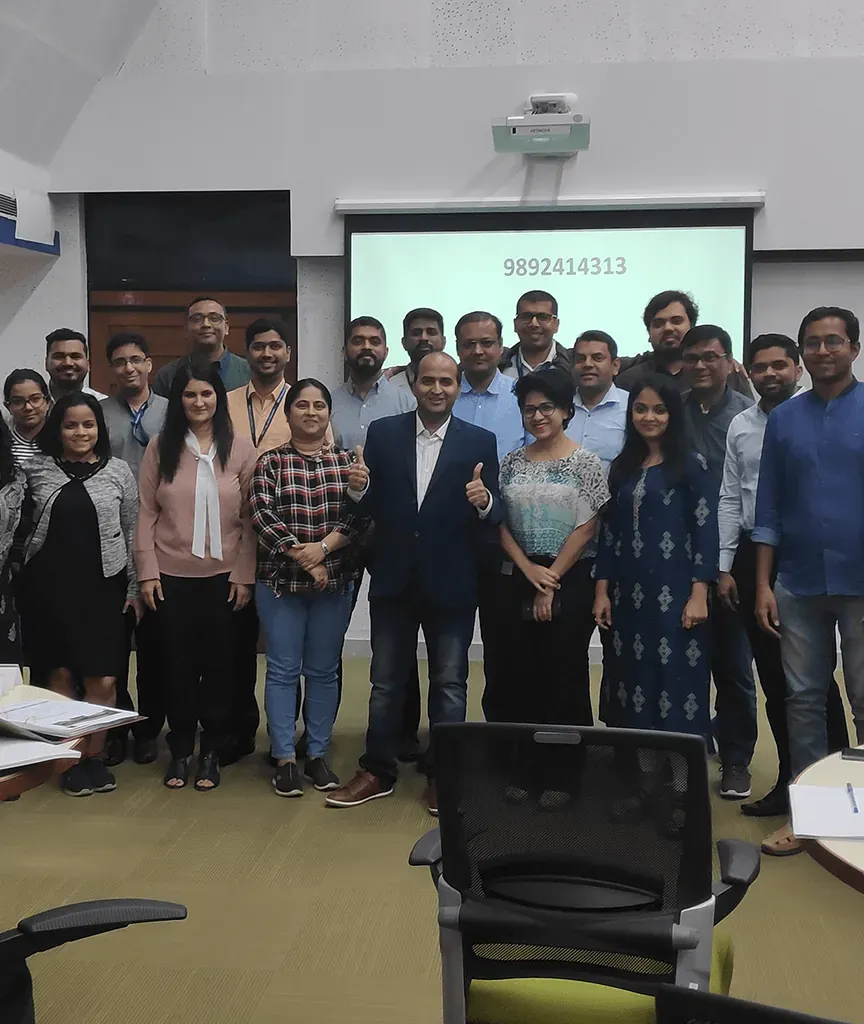
Your trainer is Hitesh Motwani, an Anthropic Claude Certified trainer and the author of Generative AI 360 (ZebraLearn). He has trained over 200,000 professionals, from executive programmes at IIM Bangalore to corporate teams across India, the Gulf and beyond. These photos are from earlier in-person sessions.
Your questions
Claude AI in the UAE: common questions
Is Claude officially available in the UAE?
Yes, the UAE is on Anthropic’s supported countries and regions list. Check the list on anthropic.com before buying, since Anthropic revises it.
Does the UAE PDPL apply to my DIFC or ADGM company?
Generally not. DIFC entities follow DIFC Data Protection Law No. 5 of 2020 and ADGM entities follow the ADGM Data Protection Regulations 2021. Mainland and most other free-zone entities fall under the federal PDPL. Confirm with your legal adviser.
Have the PDPL executive regulations been issued?
Not as of mid-2026, based on published legal commentary. The new Federal Authority for Artificial Intelligence and Data, announced in June 2026, is expected to take them forward. Watch for official publication rather than relying on vendor blogs.
How good is Claude in Arabic?
Strong on Modern Standard Arabic for reading, summarising and drafting. Treat Gulf dialect, legal Arabic for filings and fully vowelled text as drafts that a native speaker must review.
Can we pay in dirhams?
Plans are priced in US dollars and paid by card. Your card provider converts the charge, so check for foreign-transaction fees.
Do you run training in Dubai and Abu Dhabi in person?
Yes, by arrangement. Hitesh delivers in the UAE, so onsite sessions for larger groups are realistic. Live online sessions work for teams spread across emirates.
Which Claude plan should a UAE team start with?
A Team plan for a pilot group, so an admin controls access and your data is excluded from model training by default. Move to Enterprise when you need organisation-wide controls and single sign-on.
Plan Claude training for your UAE team
Tell us your emirate, your licensing authority, how many people and what you want them to stop doing by hand. We reply within one working day with a suggested format and dates on Gulf Standard Time.