Home / Locations / Claude AI and China
Claude AI · China · Checked November 2026
Claude AI and mainland China: the honest position
If you searched for Claude training in Shanghai, Beijing or Shenzhen, here is the short version. Anthropic does not offer Claude in mainland China, so we do not run Claude sessions for teams located there. This page explains the rule, the Chinese data laws that matter to companies holding China data elsewhere, and the China-facing teams we can train.
Enquiries
Tell us about your China-facing team
Say which supported country the team sits in and what Chinese-language work it handles. We propose dates in that country’s working hours.
Reply within one working day. No sales sequence, no mailing list.
Quick answer
Can you use Claude in mainland China?
No. Mainland China does not appear on Anthropic’s supported countries and regions list, and the page states that any place not listed is unsupported. The list covers the Claude apps, Claude Code, the API, and Claude models sold through cloud platforms and authorised resellers. Hong Kong and Macau are missing from it too. We cover Hong Kong separately on our Hong Kong page.
Ownership counts, not only location. On 4 September 2025 Anthropic tightened its sales restrictions. A company that is more than 50% owned, directly or indirectly, by a business headquartered in an unsupported region is excluded wherever it operates. Anthropic’s announcement names China and mentions access through subsidiaries incorporated in other countries. So the Singapore or Frankfurt arm of a China-headquartered group is not eligible just because of its address.
Where we draw the line. We will not point anyone to a VPN, a borrowed foreign account, a reseller or a relay service, and we do not teach Claude to people sitting in mainland China. Requests that depend on any of those get a polite no.
Chinese data law
PIPL, the Data Security Law and the generative AI measures
Why cover Chinese law on a page that says Claude is unavailable there? Because many companies outside China hold personal data collected in China, and some of them plan to use it with AI tools at head office. Chinese law follows that data.
The Personal Information Protection Law (PIPL) has applied since 1 November 2021. It sets three routes for sending personal information out of mainland China: a security assessment run by the Cyberspace Administration of China, a filed standard contract, or certification. Provisions issued by the CAC on 22 March 2024 relaxed the thresholds and added exemptions, for example for some transfers needed to perform a contract or manage staff across borders. The Data Security Law, in force since 1 September 2021, adds a separate regime for important data.
China also regulates AI services directly. The Interim Measures for the Management of Generative AI Services took effect on 15 August 2023 and apply to services offered to the public in mainland China. Rules on labelling AI-generated content followed on 1 September 2025, and amendments to the Cybersecurity Law that took effect on 1 January 2026 gave AI governance a footing in statute.
For a team outside China, the working rule is short. Exporting China-collected personal data so that it can be pasted into any overseas AI tool is a cross-border transfer, and your China counsel decides whether a route or an exemption covers it. We are trainers, not your legal counsel, and the thresholds change, so read the current CAC texts with a lawyer.
Keep out of prompts
Names, ID numbers, phone numbers and health or financial details of people in mainland China, unless your lawyers have confirmed the transfer route.
Ask first
Anything your China entity has classified as important data, including detailed operational, mapping or industry datasets.
Normally workable
Published laws and standards, public company filings, supplier catalogues, and contracts with personal details removed.
Who we can train
China-facing teams in supported countries
Plenty of work about China is done outside China, by companies that are not Chinese-owned. Those are the teams we train, provided the employer is eligible to buy Claude under Anthropic’s terms. As of November 2026 the places below are on Anthropic’s list. Check it again on the day you buy.
Singapore regional offices
Procurement, treasury and legal teams that cover Greater China from Singapore and read Chinese supplier and bank documents every day. See our Singapore page.
Taiwan
Electronics and component makers whose engineers and buyers work in Traditional Chinese and often receive Simplified Chinese paperwork from the mainland. See Taiwan.
Japan
Trading houses and manufacturers with long China supply chains, where staff move between Japanese, Chinese and English contracts. See Japan.
India
Importers, pharma ingredient buyers and sourcing desks that negotiate with mainland vendors in English and receive Chinese certificates. See India.
Research and investment desks
Analysts in supported countries who read mainland exchange filings, policy documents and industry reports in the original Chinese.
Compliance and export control
Teams screening Chinese counterparties, checking business licences and summarising regulatory notices for a non-Chinese-speaking board.
Chinese-language work
What Claude does with Chinese documents
Claude reads and writes both Simplified and Traditional Chinese. It copes with formal contract language, government notices and technical specifications, and it can convert between the two scripts while flagging terms that differ between the mainland and Taiwan.
In sessions for China-facing teams we practise four things: summarising a long Chinese contract into English with clause references, building a bilingual glossary so product and legal terms stay fixed, checking an English translation against its Chinese original for missing sentences, and drafting a courteous English reply that a Chinese-speaking colleague then localises. Anything that will be signed, filed or published still needs a fluent human reader.
Example workflow
How a Singapore sourcing desk could compare mainland supplier quotes
This is an illustrative exercise from our sessions, not a client case study. A European-owned equipment maker runs sourcing from Singapore. Six mainland suppliers answer a request for quotation, each with a Simplified Chinese quote, a specification sheet and payment terms in a different layout.
The buyer removes contact names and bank details, then loads the files into a Claude Project with one instruction note: extract unit price, minimum order, lead time, warranty, Incoterm and payment terms into one English table, quote the Chinese source line for every cell, and write “not stated” instead of guessing. Claude returns the table and a list of gaps. A Mandarin-speaking colleague spot-checks ten cells against the originals before the table goes to the category manager. The buyer spends the saved time on the follow-up questions.
Formats
Session formats and time zones
Live online in your zone
We schedule in the working day of the team’s own supported country: UTC+8 for Singapore and Taipei, UTC+9 for Tokyo, UTC+5:30 for India. None of these use daylight saving.
Leadership briefing
A short session for directors on eligibility under Anthropic’s ownership rule, China data limits, and which China-facing tasks to pilot first.
Onsite by arrangement
In-person delivery happens in a supported country, planned around existing travel. We do not deliver Claude training on the mainland.
Sessions are delivered in English. Exercises use your own Chinese-language documents, cleaned of personal data. For companies with staff in mainland China, a general AI-literacy briefing with no Claude accounts and no Claude exercises can be discussed case by case, and we will say so plainly if it is not a fit.
Your trainer
The person teaching
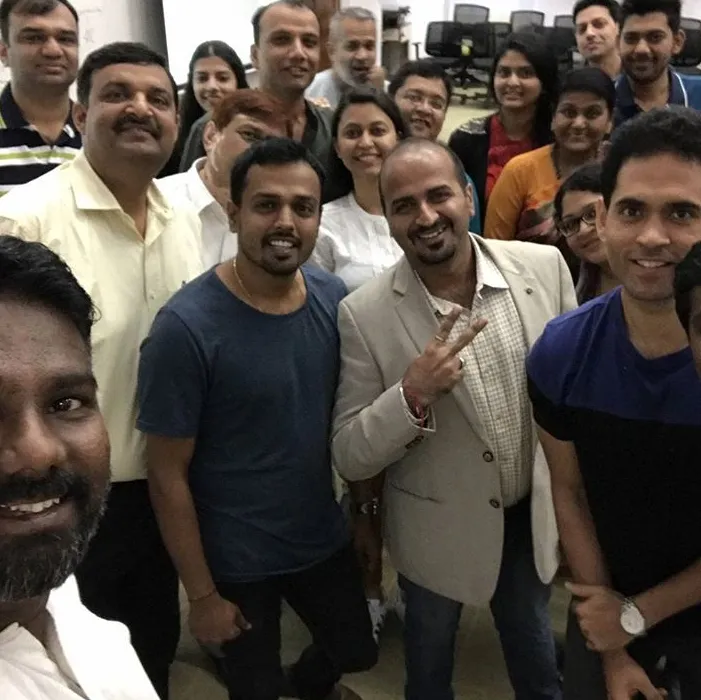
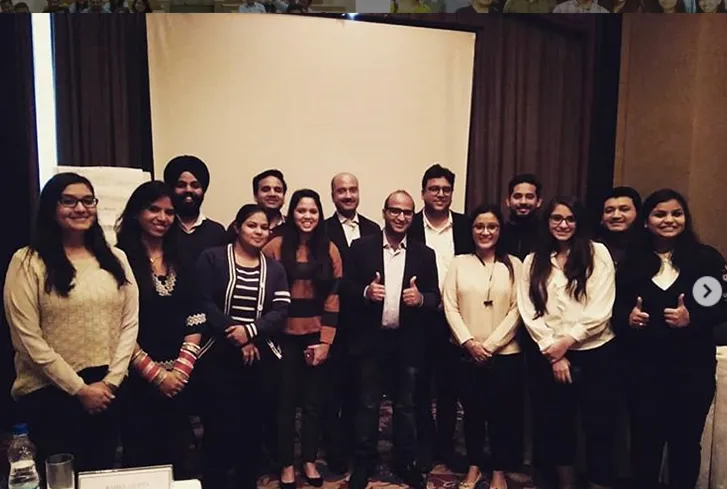
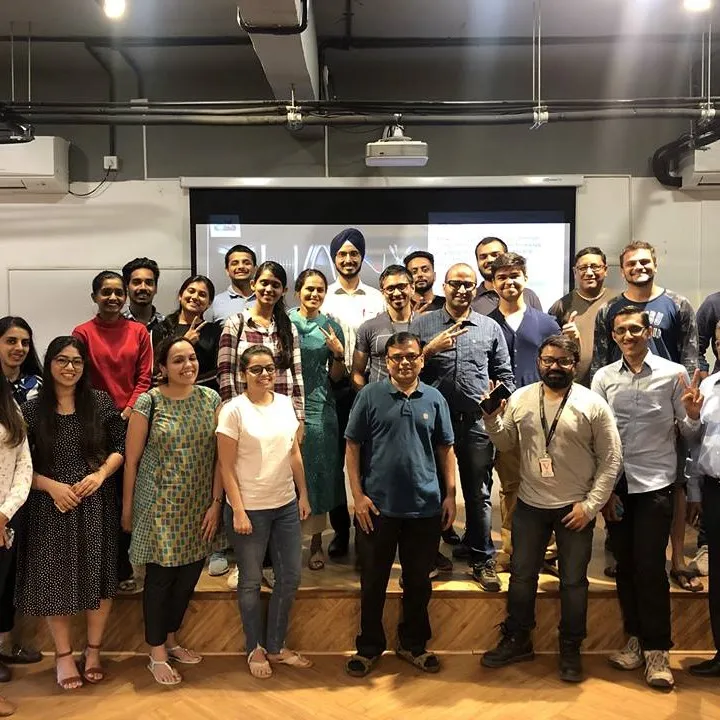
Hitesh Motwani leads every session. He is an Anthropic Claude Certified trainer and wrote Generative AI 360 (ZebraLearn). More than 200,000 professionals have been through his training, including executive programmes at IIM Bangalore and corporate teams across India, the Gulf and beyond. These pictures come from earlier in-person sessions in India.
FAQ
Claude and China: common questions
Is Claude available in China?
No. Mainland China is not on Anthropic’s supported list, and Anthropic says unlisted places are unsupported. That applies to the apps, the API and cloud-platform access.
Do you run Claude training in Shanghai, Beijing or Shenzhen?
No. We do not teach Claude to teams located in mainland China, online or in person.
We are a Chinese-owned company with an office in Singapore. Can that office buy Claude?
Under the rule Anthropic announced in September 2025, an entity more than 50% owned by a company headquartered in an unsupported region is excluded wherever it operates. Ask Anthropic about your structure. We cannot help around that rule.
We are a US or European multinational with a China subsidiary. Can our teams elsewhere be trained?
Yes, teams located in supported countries can, if the group is eligible. Staff based in mainland China would not take part in Claude exercises.
Can we send our China customer data to head office and use it with Claude?
Only if your China counsel confirms a PIPL transfer route or exemption applies. Our default advice in training is to keep China personal data out of prompts.
How good is Claude at Chinese?
Strong in both Simplified and Traditional script for business, legal and technical text. Use a fluent reviewer for anything signed or published.
Is Hong Kong treated differently?
Hong Kong has its own law, but it is also missing from Anthropic’s list. Our Hong Kong page explains the position there.
Talk to us about a China-facing team
Send us the country your team works from, who owns the company, the headcount, and the Chinese-language tasks that eat the most hours. You will hear back within one working day with a format and dates in your own time zone.