Home / Blog / Claude Fable 5.2 use cases
Claude Fable 5.2 · Use cases · Checked November 2026
Claude Fable 5.2 use cases: 11 jobs that sound crazy and are real
Anthropic released Claude Fable 5.2 on 9 November 2026. People ask us for the crazy things it can do. The surprising part is not a party trick. It is the size of the job you can hand over in one go. Below are eleven jobs a business team can try this week, each with a starting prompt, what to check by hand, and where it breaks.
Enquiries
Want your team to try these on real work?
Tell us which two or three of these jobs matter to your team and we will suggest a hands-on session built around your own files.
Reply within one working day. No sales sequence, no mailing list.
Quick answer
What Claude Fable 5.2 is, in four facts
Where it sits. Anthropic’s documentation calls Fable 5.2 its most capable model open to all customers, built for demanding reasoning and long-horizon agentic work. The launch post places it a step above Opus 5.5 in almost all the capabilities Anthropic evaluated. It follows Fable 5.1.
Fable and Mythos. Anthropic says Fable and Claude Mythos 5.2 are the same underlying model. Mythos is offered only to organisations vetted by Anthropic. Fable is the version everyone else gets, with extra safeguards for cybersecurity and biology.
What it is for. The model page lists the typical uses: agent sessions that run for hours, multistep deep research, and analysis carried through to a finished document, spreadsheet or deck. Its context window is 1M tokens, roughly 555,000 words by Anthropic’s estimate.
Who gets it. Anthropic lists Fable 5.2 for Pro, Max, Ultra, Team and Enterprise users, on the Claude API as claude-fable-5-2, and on AWS, Google Cloud and Microsoft Foundry. How much Fable usage you get varies by plan and seat, so check your own model picker first.
Research and writing
Three long jobs with words
1. A multi-hour research report, split across subagents. One question in, a cited report out, with separate agents on separate sub-questions. In the Claude app, turn on Research. In Claude Code or Cowork, ask for subagents by name. Start with: Research how the five largest firms in our sector describe their AI governance. Use one subagent per firm. Cite a source for every claim, mark anything older than twelve months, and finish with a two-page memo and a gaps list. Check by hand: open ten citations at random and read the source. Where it breaks: every subagent spends usage like a full conversation, and weak sources get repeated with confidence.
2. A week of meeting transcripts turned into decisions, owners and a deck. Upload every transcript from the week. Start with: List every decision, who owns it, the due date and the exact sentence it came from. Mark unresolved disagreements separately. Then build a six-slide summary for the leadership meeting. Check by hand: owners and dates, against the quoted sentence. Where it breaks: transcription errors in names, and a discussion that never reached a decision being written up as one.
3. Rewriting hundreds of pages with QA checks. A help centre or a policy library, sitting as files in a folder for Claude Code or Cowork. Start with: Rewrite each file in this folder to the attached style guide. Keep every number, product name and link unchanged. After each batch, run a check that compares numbers and links before and after, and log any mismatch to a CSV. Check by hand: the mismatch log, plus one page in every twenty read in full. Where it breaks: tone drifts between batches, and pages start to sound alike if the style guide is thin.
Documents and numbers
Four jobs for legal, finance and operations
4. Auditing a 300-page contract set against your playbook. The agreements and your negotiation playbook sit in one session. Start with: Compare each agreement with the playbook. Build a table: clause, playbook position, what this contract says, page reference, risk level. List clauses the playbook expects that are missing. Check by hand: every high-risk row, at the page cited. Where it breaks: scanned pages with poor text, definitions that change meaning between agreements, and anything that needs a legal judgement. A lawyer still signs off.
5. Reconciling finance exports and explaining the variances. Give it the ledger export, the bank or sub-ledger export and last month’s commentary. Start with: Match these two exports on reference and amount. List unmatched items on each side. For every variance above the threshold I give you, propose a cause and name the rows that support it. Label each cause as confirmed by the data or as a guess. Check by hand: totals against your system, and every explanation labelled a guess. Where it breaks: duplicate references, sign conventions, and month-end timing that only your team knows about.
6. From raw CSV to charts and a memo. Start with: Profile this file first and tell me what is wrong with it. Then answer these three questions, show the chart for each, and write a one-page memo for a director. Keep a list of every row you dropped and why. Check by hand: the dropped-rows list and one figure recalculated in Excel. Where it breaks: mixed date formats, and a tidy story built on a column that meant something else.
7. A working internal tool from a spreadsheet. Claude can build an artifact, a small app or dashboard that opens beside the chat. Start with: Here is our leave tracker as a spreadsheet. Build a dashboard with filters by team and month, a clash warning when more than two people in a team are off, and an export button. Use only this data. Check by hand: three filters against the original sheet, and who can open the link. Where it breaks: it is a prototype. Treat it as a brief for the real tool, not as the tool.
Code and actions
Four jobs where Claude does the work, not just the draft
8. A messy codebase task, end to end. Anthropic’s Fable page describes large, loosely defined problems across several repositories. In Claude Code, type /model fable, because no plan uses Fable by default. Start with: This report job fails about once a week. Find the root cause, write a failing test that reproduces it, fix it, run the full test suite and open a pull request that explains the change. Check by hand: the diff and the test, as you would for a colleague. Where it breaks: missing tests, secrets it has no access to, and a fix that passes tests but ignores a team convention nobody wrote down.
9. Fable as the lead agent, cheaper models as the workers. Anthropic describes this pattern itself: Fable plans and reviews, and smaller models do the bulk work. In Claude Code you can define subagents that run on a smaller model. Start with: You are the lead. Split this backlog of 200 support tickets into batches, give each batch to a worker subagent to classify and draft a reply, then review a sample from every batch and send back any that fail the checklist. Check by hand: the sample the lead rejected, and a sample it passed. Where it breaks: a vague checklist. Workers only see what the lead passes to them.
10. A back-office task in the browser or on the desktop. With Claude in Chrome, or Cowork with browser and computer use, Claude clicks, types and fills forms. Start with: Open the supplier portal, download this month’s statements for the suppliers in this list, save them to this folder with the naming rule below, and stop and ask before anything is submitted or deleted. Check by hand: the file count against the list, and the action log. Where it breaks: logins, CAPTCHAs, changed page layouts and pop-ups. Anthropic’s help page says Claude in Chrome is still risky, so start on a low-stakes site. See Cowork vs Claude Code.
11. An agent that checks something every day. Cowork and Claude Code both offer scheduled tasks that run in the cloud. Start with: Every weekday at 8 am, read the shared tenders folder and the three public tender pages below. Send me a short note with anything new that matches our criteria, and say so plainly when there is nothing. Check by hand: the first week of runs, every day. Where it breaks: a connector that loses its login makes the agent go quiet. Scheduled tasks in Claude Code are still a research preview, so behaviour and limits may change.
Limits and safe use
Before you run any of these on company data
A person reviews the output
Every job above ends with a check by hand. Anthropic says in its launch post that building tests which catch every failure before release remains unsolved.
Know the safeguards
Fable 5.2 has safety classifiers for cybersecurity and biology. Anthropic says many flagged queries are routed to a less capable model. Security and life-sciences teams with legitimate work can apply to Anthropic’s verification programmes.
Data retention
Anthropic states that Fable models require 30-day data retention for safety monitoring by default, with zero-retention options only for eligible enterprise customers. Tell your compliance team before the pilot.
Usage and cost
Anthropic says Fable models use your limits faster than other Claude models. In Claude Code the Fable row can show that it requires usage credits. On the API the list price per token is twice that of Opus 5.5. More in our guide to Claude usage limits.
Permissions and a stop rule
Grant one folder and the sites the task needs. Keep approval on for anything that sends, submits, pays or deletes. Say what done looks like and when to stop and ask.
Which model when
Fable 5.2, Opus, Sonnet or Haiku?
Anthropic’s own advice is to start most work on Opus 5.5 and move to Fable 5.2 when the task needs demanding reasoning or long-horizon agent work, or when Opus at higher effort still falls short. Its model guide puts Sonnet 5.5 on everyday work that needs speed, and Haiku 5.5 on high-volume, quick tasks such as classification and extraction.
Our rule for a team: draft emails and short summaries on Sonnet. Use Opus for daily coding and analysis. Keep Fable for the jobs on this page, where one instruction covers hours of work and a wrong answer is expensive. Test the same task on two models before you decide.
Your trainer
Who runs the sessions
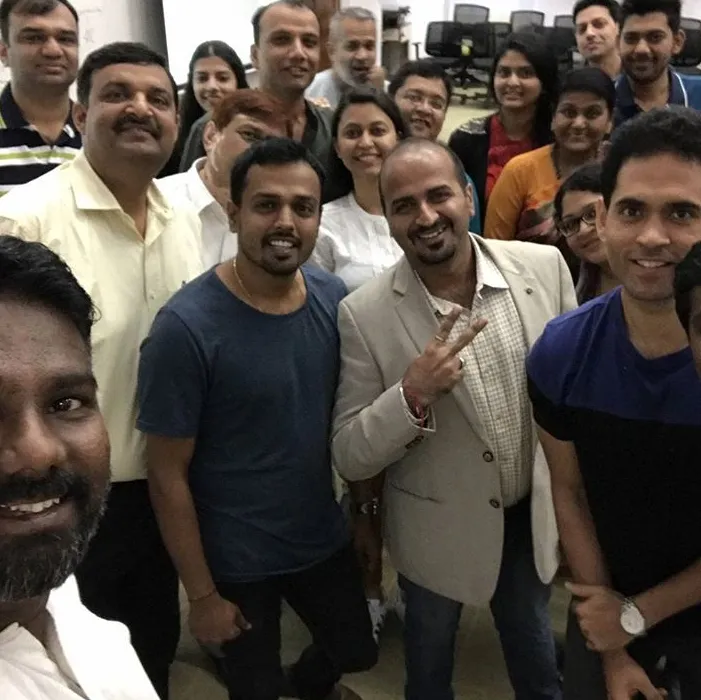
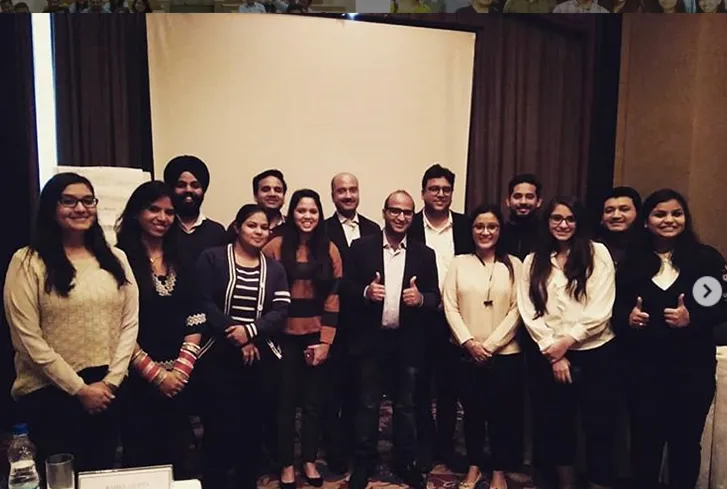
Training is led by Hitesh Motwani, an Anthropic Claude Certified trainer and author of Generative AI 360 (ZebraLearn). He has trained more than 200,000 professionals, including executive programmes at IIM Bangalore and corporate teams across India, the Gulf and beyond. The photos below are from his past in-person sessions.

Your questions
Claude Fable 5.2 use cases: questions and answers
What is Claude Fable 5.2?
It is the Claude model Anthropic released on 9 November 2026 for demanding reasoning and long agent tasks. Anthropic describes it as its most capable model open to all customers. The API model ID is claude-fable-5-2.
How is Fable 5.2 different from Claude Mythos 5.2?
Anthropic says they are the same underlying model. Mythos 5.2 is limited to organisations verified through Anthropic’s programmes. Fable 5.2 is generally available and has added safeguards for cybersecurity and biology.
Do we need Fable 5.2 for everyday work?
Usually not. Anthropic recommends Opus 5.5 as the starting point for most coding and knowledge work. Move a task to Fable when it is long, open-ended and still failing on Opus.
Which plans include Fable 5.2?
Anthropic lists it for Pro, Max, Ultra, Team and Enterprise users. How much you can use depends on plan and seat type, and some usage may draw on usage credits.
How do we switch to Fable 5.2 in Claude Code?
Run /model fable in a session, on a current version of Claude Code. No plan uses Fable as its default model, so you have to select it.
Can Fable 5.2 run for hours without anyone watching?
Anthropic lists agent sessions that run for hours as a typical use. Someone still sets the goal, the permissions and the stop rule, and reviews the result.
Why did Claude answer with a different model?
Fable 5.2 has safety classifiers for cybersecurity and biology. When a request is flagged, Anthropic routes it to a less capable Claude model instead.
Run these Fable 5.2 jobs with your team in a workshop
Pick three jobs from this page. Bring your own contracts, exports or repository. In a hands-on Fable 5.2 workshop we set each one up with your team and agree the checks. See our corporate Claude AI training formats, or tell us about your team in the form.