Home / Locations / Claude AI in Tunisia
Claude AI · Tunisia · Checked November 2026
Claude AI in Tunisia: access, the 2004 data act and training for export and offshoring teams
Tunisian companies sell most of what they make to Europe, and a large part of the service sector works for French clients from Tunis, Sousse or Sfax. That shapes every question about Claude. Is it offered here? How do we pay for it from a dinar account? What does a twenty-year-old data protection act say about sending data to a foreign server, and what will the bill now in parliament change? Our answers are below, followed by how the training runs.
Enquiries
Tell us about your team in Tunisia
Describe the team, its clients and the languages it writes in. We reply with a suggested format and dates on Tunis time, which is UTC+1 throughout the year.
Reply within one working day. No sales sequence, no mailing list.
Quick answer
Claude in Tunisia: the short version
Availability. Tunisia is included in the list of supported countries published by Anthropic. We looked on 10 November 2026. The same list applies to claude.ai and to the API, so developers and office users are in the same position. Lists change, and the published page is the authority.
Paying. This is the real obstacle. The dinar is not freely convertible, and Claude is sold by card in foreign currency. Companies normally need a card with a foreign-currency allowance, and the allowance is limited. Speak to your bank about which card and which ceiling apply to software subscriptions before you promise seats to thirty people. Wholly exporting companies with foreign-currency accounts are usually in an easier position.
Languages. French and Modern Standard Arabic are both handled well. Tunisian dialect, Derja, is understood unevenly and should not be used for final written output.
Data. Organic Act No. 2004-63 is still the law in force. It expects formalities with the national authority, the INPDP, and it is restrictive on transfers abroad. See the rules section.
Sectors
Tunisian industries and the documents that slow them down
Insulated wire and cable harnesses are the country’s largest export line, ahead of clothing and olive oil, and around 70% of exports go to the European Union. Most of the paperwork below therefore arrives in French, English, German or Italian and is answered by someone working in French or Arabic.
Automotive components and wiring
Plants supplying European carmakers receive engineering change notices and customer-specific requirements every week. Claude summarises each change, lists the affected work instructions and prepares the French version for the line supervisors.
Textiles and clothing in the Sahel
Factories around Monastir and Sousse answer social audit and chemical compliance questionnaires from European brands. Claude drafts answers from existing audit reports and marks questions the documents do not cover.
Offshoring and IT services
Engineering and support teams in Tunis and at the El Ghazala technology park use Claude for requirement analysis, test documentation and Claude Code. Client contracts decide what may be shared, so those are read first.
Phosphates and fertiliser
At the Gafsa mining basin and the Gabès chemical plants, long technical, safety and environmental studies can be condensed into management notes, and tender documents compared against a checklist.
Olive oil and food exporters
Around Sfax and elsewhere, exporters prepare product specifications, certificates and buyer correspondence in several languages from one approved French source.
Tourism in Hammamet, Sousse and Djerba
Hotels and agencies draft guest replies in French, German, English and Italian, summarise tour operator contracts and prepare seasonal staff briefings. A manager approves anything sent to a guest.
Rules
Organic Act 2004-63, the INPDP and the reform bill
Tunisia was early. Organic Act No. 2004-63 of 27 July 2004 on the protection of personal data created the Instance Nationale de Protection des Données Personnelles (INPDP), and the country joined the Council of Europe’s Convention 108 in 2017. The act predates cloud software, and that shows in two places.
Declaration before processing. The act requires a prior declaration to the INPDP before personal data is processed, with authorisation for some categories. If your company declared its HR or customer files years ago, a new AI use of the same data is worth checking against that declaration.
Transfers abroad. Sending personal data out of Tunisia is restricted, and the legal summaries we consulted describe a need for INPDP authorisation. Typing customer details into a tool hosted outside the country is such a transfer. We could not confirm from a primary source exactly how the authority treats each case today, so ask it or your lawyer and do not rely on a general summary, ours included.
The bill. A group of deputies tabled a draft organic law of 132 articles in July 2025 to replace the 2004 act. Press reports describe a data protection officer requirement, breach notification, revised transfer rules, tighter treatment of health data and fines of up to 200,000 dinars. The Assembly’s rights and freedoms committee held hearings in February 2026. As of our check in November 2026 we found no report that it has been adopted, and one website giving an entry-into-force date in July 2026 is contradicted by later coverage. Until a new text is published in the official gazette, the 2004 act applies.
This section is orientation from a training provider. It does not replace advice from a Tunisian lawyer.
Do not enter
National identity card numbers, health information, payroll files, bank details and recordings or transcripts of identifiable callers.
Clean before use
Support tickets, claims and customer emails. Take out names, phone numbers and contract numbers and keep only the text you need analysed.
Safe to begin with
Customer specifications, standards, tender files, internal procedures and public regulation. No personal data is involved, so no transfer formality is triggered.
Offshoring
If you work for European clients, two sets of rules apply
A Tunisian service company handling data for a French bank or insurer is bound by Tunisian law and, through its contract, by the client’s European obligations. The contract usually names the tools and sub-processors that may be used. An AI assistant that is not on that list is not permitted, however careful the team is.
The practical route is to ask the client in writing, propose a pilot on non-personal material, and keep the answer on file. Our pages for France and Germany describe what your counterparts there must comply with, which helps when you write that request.
Example workflow
Example for training purposes: an engineering change at a harness plant near Sousse
The following scenario is invented to show a method. No client is described. A German customer sends a 30-page engineering change notice in English for a cable harness already in production. The methods engineer must find what changes on the line and update the French work instructions before the cut-in date.
She uploads the change notice, the current work instructions and the bill of materials to a Claude Project. No personal data is in any of them. Her instruction: list each change with its page reference, name the work instruction steps and part numbers affected, write the revised steps in French in the existing format, and state clearly where the notice is ambiguous.
Claude produces a change table, draft French steps and three questions for the customer, such as a connector reference that appears with two different suffixes. The engineer checks every line against the drawing, sends the questions and releases the instructions through the normal approval. The tool shortens the reading and drafting. It does not approve anything.
Formats
Session formats on Tunis time
Live online, UTC+1 all year
Tunisia stays on Central European Time and does not change its clocks in summer. From late March to late October it is therefore one hour behind Paris and Berlin, which matters when a mixed Tunisian and European group attends.
Briefing for directors
A compact session for general management on what Claude can do, what the 2004 act and the pending bill mean for a policy, and how to choose a first pilot.
Onsite by arrangement
In-person sessions in Tunis, Sousse or Sfax can be arranged for larger groups. We agree dates individually.
The trainer works in English. Exercises are prepared on your own French and Arabic documents, and it helps to have one colleague who can relay questions from participants who prefer French.
Your trainer
About your trainer
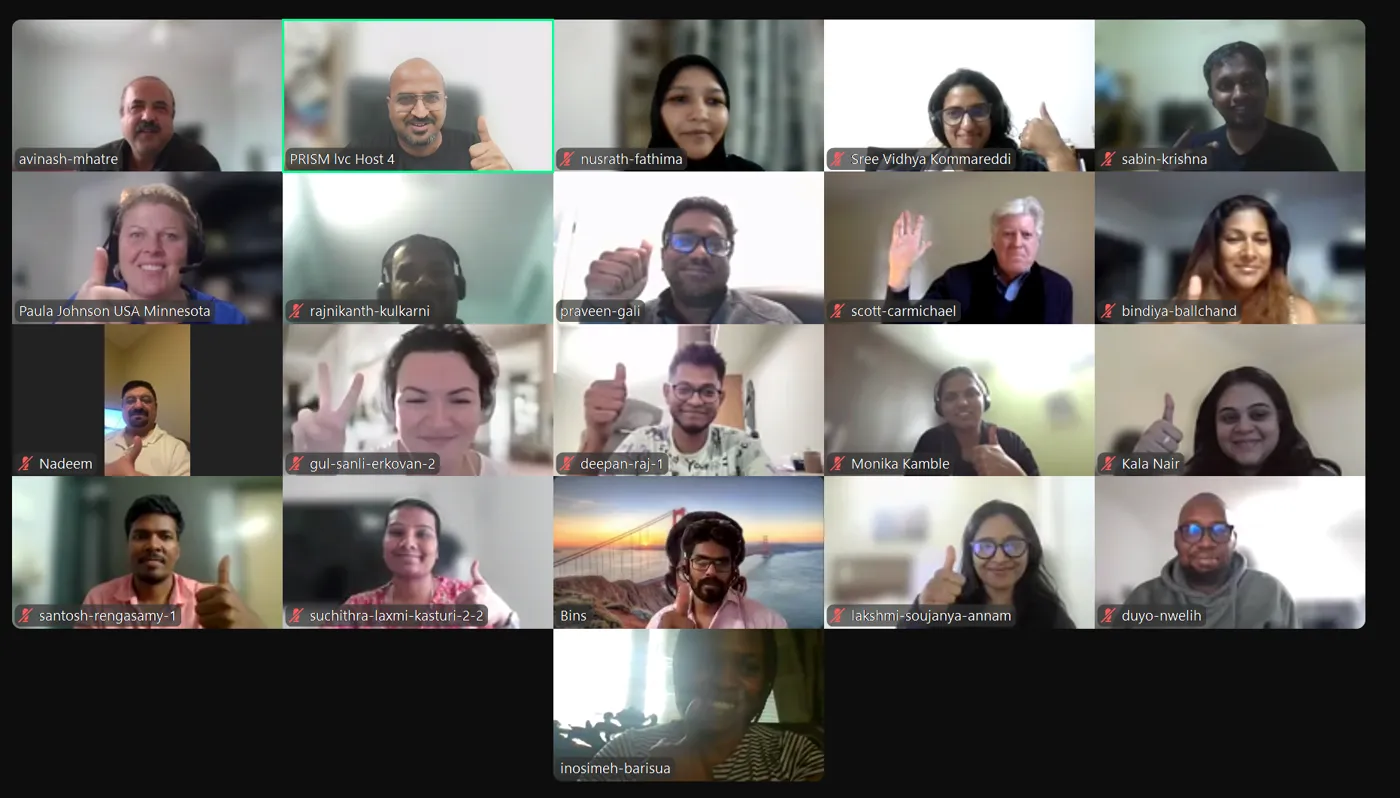
The programme is taught by Hitesh Motwani, an Anthropic Claude Certified trainer. He is the author of Generative AI 360 (ZebraLearn) and has trained over 200,000 professionals, among them participants in executive programmes at IIM Bangalore and corporate teams across India, the Gulf and beyond. These photographs are from his earlier classroom sessions, not from Tunisia.



FAQ
Tunisia: common questions about Claude
Is Claude available in Tunisia?
Yes. Tunisia was on Anthropic’s supported countries list on 10 November 2026, for claude.ai and the API alike.
Can we pay in Tunisian dinars?
We are not aware of dinar billing. Payment is by card in foreign currency, within the allowance your bank grants. Confirm the card type and ceiling with the bank before a team rollout.
Does Claude write Tunisian Derja?
It follows a good deal of Derja in Arabic or Latin letters, but output is inconsistent. Use French or standard Arabic for anything that will be sent or filed.
Do we need to inform the INPDP before using Claude?
If prompts contain no personal data, the 2004 act is not engaged. If they do, the declaration and transfer rules apply, and your lawyer should confirm the position with the INPDP first.
Has the new data protection law passed?
Not as far as we could verify in November 2026. The bill tabled in July 2025 was in committee during 2026. Check the official gazette or the Assembly’s site for the current stage.
Our client is a French company. Can agents use Claude on its tickets?
Only if the client agrees in writing. The contract and the client’s European obligations govern which tools may touch its data.
Do you teach Claude Code to development teams?
Yes, as a separate practical track run on the team’s own code base and review rules.
How is the training priced?
By programme, after a first conversation about the group and its goals. We do not publish or charge per-seat fees.
Set up Claude training for your team in Tunisia
Write to us with the number of participants, their departments and the clients or markets they serve. We answer within one working day with a format and dates on Tunis time.