Home / Locations / Claude AI in Turkey
Claude AI · Turkey · Checked November 2026
Claude AI in Turkey: KVKK, Turkish-language work and training for teams
Turkish companies export to Europe, report to head offices abroad and answer to a data protection board that rewrote its foreign-transfer rules in 2024. So when a plant manager in Bursa or a compliance head in Istanbul asks us about Claude, the conversation turns quickly to KVKK. This page explains the availability position, what the transfer rules mean for an ordinary prompt, how Claude handles Turkish, and how we run training for teams in Türkiye.
Enquiries
Tell us about your team in Turkey
Share the functions involved, how many people, and what they write or review all day. We respond with a format and dates on Türkiye time (UTC+3, no clock changes).
Reply within one working day. No sales sequence, no mailing list.
Quick answer
Does Anthropic offer Claude in Türkiye?
Yes. The entry reads “Türkiye (Turkey)” on Anthropic’s supported countries and regions page, which we consulted on 11 November 2026. The page makes no distinction between the chat apps and the API, so both are open to customers here.
Paying for it. Read the price and currency on your own checkout screen; we make no claim about lira billing. Finance teams should confirm that the corporate card is cleared for recurring payments to a foreign vendor, and decide who owns the subscription before twenty people expense it separately.
Turkish. Claude writes fluent, grammatical Turkish and handles the long suffix chains that trip up simpler tools. It keeps the polite siz form when told to. Anthropic’s help page does not list Turkish among the app’s interface languages, so menus appear in another language. Have a native reader check official petitions, court filings and anything with legal weight.
KVKK. Since Claude is hosted outside Türkiye, any personal data in a prompt raises the foreign-transfer question under Article 9. The detail follows.
KVKK
Law 6698 after the 2024 amendments: what Article 9 now asks
Türkiye’s Personal Data Protection Law, No. 6698, is known by its Turkish initials, KVKK. It dates from 2016 and is applied by the Personal Data Protection Authority and its decision-making Board. Law No. 7499, published on 12 March 2024, changed three areas: the conditions for processing special categories of data, the route for challenging Board fines, and the rules on sending data abroad. The amendments took effect on 1 June 2024, with the old and new versions of Article 9 running side by side until 1 September 2024.
The old habit no longer works. For years Turkish companies relied on explicit consent to justify foreign transfers. Under the amended Article 9 there are three routes in order: a Board adequacy decision for the destination; failing that, an appropriate safeguard such as the Board’s standard contract, binding corporate rules or an approved undertaking; and failing that, a narrow set of exceptions for transfers that are occasional. Law-firm notes from mid-2026 say the Board had still not published an adequacy decision for any country.
Standard contracts. A Regulation of 10 July 2024 sets out the procedure. Where parties sign the Board’s standard contract, it has to be notified to the Authority within five business days of signature, and the 2024 law added a fine for missing that step.
Generative AI. On 24 November 2025 the Authority published a guide on generative AI and personal data, arranged as 15 questions. It confirms that KVKK applies when such tools process personal data, and that output can itself be personal data. It is guidance, not a new statute.
We are not lawyers and this is not a legal opinion. Your KVKK counsel should decide which route, if any, covers personal data in your prompts.
Off limits
T.C. identity numbers, health reports, payroll, union membership and biometric records. Several of these are special-category data with tighter conditions.
Anonymise before use
Customer complaints, dealer correspondence and driver or operator lists. Remove names, plates and phone numbers and work with reference codes.
No transfer question
Customer specifications, standards, customs tariff notes, quality procedures, machine manuals and published regulations. Files without personal data are where most teams should begin.
Sectors
Turkish industry, sector by sector
Germany is Türkiye’s largest export market and the EU customs union shapes daily work in most factories. Much of what Claude does here is help Turkish teams answer foreign customers and regulators in the format they demand.
Automotive suppliers in Bursa, Kocaeli and Sakarya
Customer-specific requirements run to hundreds of pages. Claude compares a new revision with the old one, lists what changed for the quality team, and drafts English or German replies to customer queries from Turkish engineering notes.
White goods and electronics in Manisa and Eskişehir
Summarising field-failure reports from service networks, preparing test documentation for EU conformity files, and turning technical bulletins into plain instructions for dealers.
Textiles and apparel
Mills in Denizli, Bursa and Gaziantep and garment makers around Istanbul answer brand audits and chemical-compliance questionnaires. Claude drafts answers from existing certificates and flags what is missing.
Banking, payments and fintech in Istanbul
Reading BDDK and Central Bank regulations and communiqués, mapping amendments to internal procedures, and summarising them for product teams. Banks should also check their sector rules on where systems and data may sit before any pilot.
Road and sea logistics
Forwarders running trucks to Europe and operators at Mersin and Ambarlı check document sets, draft customs correspondence and compare carrier contracts.
E-commerce and retail
Product descriptions in Turkish and English from one specification sheet, seller policy summaries and analysis of anonymised customer feedback.
Example workflow
For illustration: an Istanbul forwarder checks an export document set
What follows is a made-up training case, and no real company is described. A freight forwarder moves a truckload of machine parts from Kocaeli to a buyer near Stuttgart. Before the vehicle reaches the border, the commercial invoice, packing list, CMR consignment note and A.TR movement certificate must agree with each other. A mismatch in weights or consignee details means a truck waiting at customs.
The operations clerk exports the four documents as text, deletes the driver’s name and passport number, and gives them to Claude with one instruction: compare consignor, consignee, goods description, package count, gross and net weight, and invoice value across all four, and show every difference in a table with the exact wording from each document.
Claude reports two differences: the packing list shows 18 pallets where the CMR says 16, and the consignee’s address is abbreviated differently on the A.TR. The clerk checks with the shipper and corrects the CMR. The tool has not replaced the customs broker. It has done the cross-reading that people skip at six in the evening.
Formats
Training formats on Türkiye time
Live online, UTC+3
Türkiye stopped changing its clocks in 2016 and stays on UTC+3 through the year, so the gap to European customers shifts in summer and winter while your session times do not. We place sessions in your working day and split them so shift patterns in plants can be respected.
Executive session
A single meeting for general managers and function heads covering what Claude can do, the Article 9 question in plain terms, and a pilot plan with named owners.
Onsite by arrangement
Face-to-face delivery in Istanbul or at a plant in the Marmara region is possible for larger groups, subject to travel planning that we discuss when we first speak.
All teaching is in English. People can prompt in Turkish and practise on Turkish documents. For shop-floor or back-office groups with limited English, we ask you to nominate a colleague to interpret questions. Groups with regional offices may also want our Germany and UAE pages.
Your trainer
Who teaches the programme
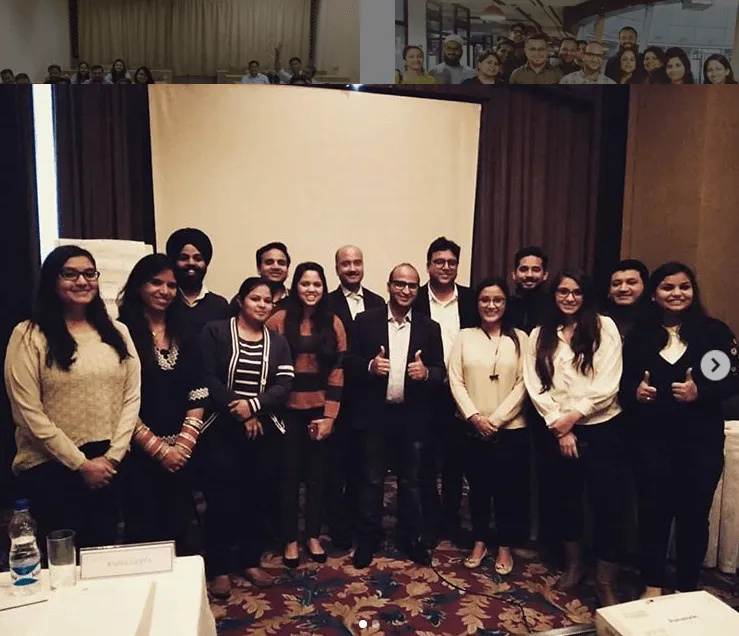
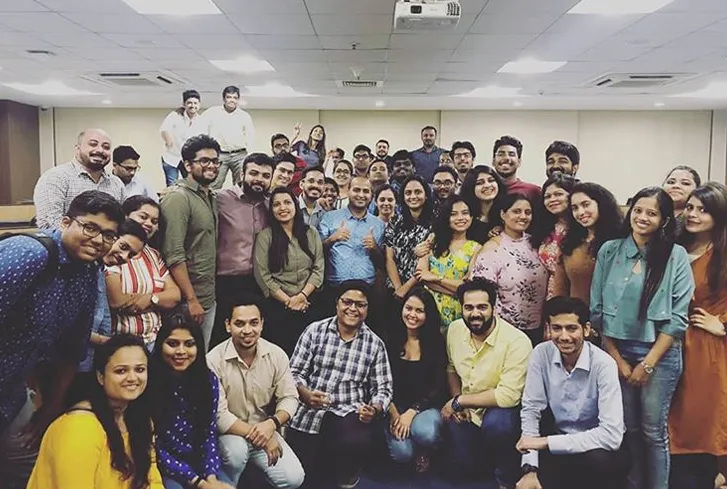
Your sessions are taken by Hitesh Motwani. An Anthropic Claude Certified trainer and the author of Generative AI 360 (ZebraLearn), he has trained 200,000+ professionals, including executive programmes at IIM Bangalore and corporate teams across India, the Gulf and beyond. The three photographs show past face-to-face workshops in India; we have no pictures from Türkiye to show yet.

Your questions
Turkey and Claude: common questions
Is Claude accessible in Turkey without workarounds?
Yes. Türkiye is a listed supported country, so accounts are opened and paid for in the normal way.
Can we pay in Turkish lira?
Check the checkout screen on your account for the currency shown. We do not state one here. Make sure the card permits recurring foreign payments.
Is employee consent enough to put personal data into Claude?
After the 2024 amendments, explicit consent is no longer a general basis for regular transfers abroad. Article 9 expects an adequacy decision, an appropriate safeguard such as a notified standard contract, or a narrow exception. Ask your KVKK counsel.
Has the KVKK Board said anything about generative AI?
Yes. A guide in 15 questions was published on 24 November 2025. It explains how KVKK applies to these tools and is worth giving to whoever writes your internal AI policy.
Does it matter that we already comply with GDPR for EU customers?
It helps with discipline, but KVKK is a separate law with its own transfer procedure and its own notification duty. One does not substitute for the other.
How does Claude cope with Turkish technical terms?
Well, if you supply them. Give it your company’s term list, especially where the shop floor uses English or German words, and ask it to keep those unchanged.
Can our software team learn Claude Code?
Yes. There is a developer track, taught hands-on in the team’s own repository.
What is the fee?
It is quoted for the whole programme once we understand the group and the goals. We do not price per participant and do not list fees online.
Set up Claude training for your team in Türkiye
Write to us with the team size, the departments and the reports or documents that take the longest. Within one working day you will have a suggested programme and times in UTC+3.